
There are some people whose paths cross yours in more than one chapter of life. Arsala Jamali is one of those people for me.
We first knew each other at SZABIST, back when so much of what our careers would eventually become was still ahead of us. Our paths crossed again in those early professional years before life eventually took us in different directions and, later, different countries. So, there is something especially meaningful about reconnecting all these years later and getting the chance to share her story through Tech She Secures.
There is also something pretty special about knowing someone before the titles, the leadership roles, and the recognition. Back then, we were all just figuring things out, learning, working hard, and trying to build careers without really knowing where they would take us.
And now, years later, here we are.
Arsala has built an incredible career in cybersecurity, risk, and leadership, but I think what makes this conversation especially meaningful is getting to hear the story behind that journey from someone I knew near the beginning of it.
This one feels a little full circle for me.
Meet Arsala Jamali.
Journey, Identity & Becoming
We have known each other since our SZABIST days, which makes this conversation especially meaningful for me. When you think back to the Arsala you were then, what parts of her are still very much with you today, and what do you think she would be most surprised by about the life and career you have built?
The curiosity is still with me. Back then I wanted to understand why systems break and why controls exist, and I still ask those questions in every meeting. So is the discipline of finishing what I start, and the belief that doing the work properly matters more than being noticed for it.
What would surprise her is the scale. She was studying information security management as a subject. Today I sit with the Ministry's executive leadership and own a national-level ISO/IEC 27001:2022, CISA certification programme. I think she would also be surprised that the most important skills turned out to be listening and communication, more than technical depth.
Your journey has taken you from technology into cybersecurity, risk, audit, governance, and leadership. Was there a defining moment when you knew cybersecurity was where you wanted to build your career, or did that path evolve more naturally over time?
It evolved, and I am glad it did. I started in information risk at KPMG, where I discovered that the most interesting problems sit where technology, risk and people meet. Consulting taught me frameworks, audit taught me to ask for evidence, and governance roles taught me to turn findings into change.
At some point I realised I was not drifting between disciplines. Each one was giving me a different lens on the same question: how do we make an organisation genuinely resilient? That is when cybersecurity stopped being a job and became my career.
Building a career across countries can require you to adapt, rebuild your network, and sometimes prove yourself all over again. What was that experience like for you moving from Pakistan to the UAE, and what did it teach you about resilience, confidence, and creating opportunities in a new environment?
Moving countries means your reputation does not travel with you. I had spent years at HBL (one of the largest banks in Pakistan) leading governance and compliance across international operations, and in a new market I had to show my value again from scratch. That was humbling, and it was also useful.
What helped was getting specific: learning how UAE regulation works (UAE IA, TDRA, Cyber Security Council of UAE), delivering visible results quickly, and building relationships one project at a time. It taught me that confidence comes from preparation, that resilience is the willingness to start again, and that opportunities tend to find people who show up consistently and do decent work.
Cybersecurity, Risk & Leadership
Having worked on different sides of risk and security, from consulting and audit to leading cybersecurity and governance initiatives, how has that shaped your view of what effective security leadership actually looks like?
Effective security leadership is translation. I have been the consultant assessing risk, the auditor testing controls, and now the person who owns the programme, and each seat shows you something the others hide.
A good leader turns technical control data into risk language that executives can act on and turns compliance mandates into things teams can do. Leaders who see only one side tend to either over-police the business or under-protect it. The goal is security that people understand, support and can sustain.
As your career has progressed, how has your leadership style evolved? What do you understand about leading people and navigating complexity today that you wish you had understood earlier in your career?
Early in my career I believed rigour alone would win people over: if the analysis were right, the action would follow. I have since learned that alignment matters as much as accuracy. For security to stick, IT, HR, Legal, Audit and Compliance all must feel ownership of it.
What I wish I had understood sooner is that influence matters more than authority, that people support what they help build, and that being calm and clear in a difficult moment is a leadership skill.
AI & What Comes Next
AI is changing how organizations think about technology, risk, governance, and accountability. What excites you most about where AI is heading, and where do you think leaders need to be more thoughtful or intentional?
I am excited by what AI can do for risk visibility: faster control monitoring, better pattern detection, and clearer reporting for decision-makers. It can free security professionals to spend more time on judgement and less on manual evidence-chasing.
Where leaders must be more intentional is governance. Who is accountable when an AI-assisted decision goes wrong? Where is AI being used across the organisation, and what data does it touch? Security, privacy, and accountability need to be designed in from the start, not added after adoption. Technology moves quickly, but trust is built slowly and lost quickly.
Growth, Recognition & the Lessons Behind It
You were recently recognized for your work in cybersecurity. What did that moment mean to you personally, and what part of the journey behind that recognition do you think people on the outside rarely see?
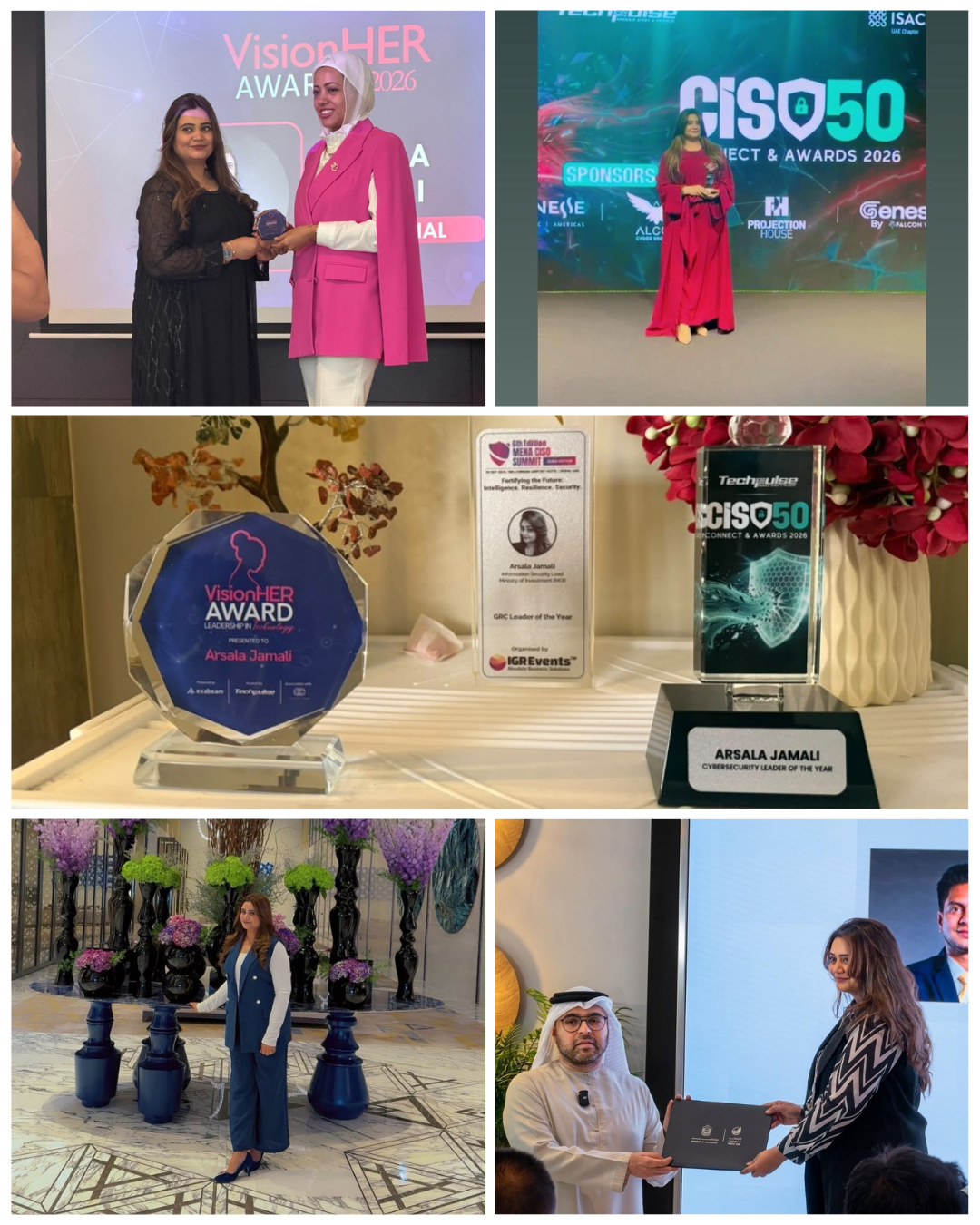
Being named Cybersecurity Leader of the Year at the CISO50 Connect & Awards was a deeply meaningful moment. It felt like validation of years of steady work, and I see it as recognition of the whole team as much as of me.
What people rarely see is the unglamorous part: chasing remediation to closure, long stakeholder conversations, audit evidence, awareness sessions that nobody applauds, and the many small decisions that never make a headline. Awards are visible, but resilience is built quietly, in the work no one sees.
What has been one of the most challenging or defining seasons of your career, and how did it change you, either as a leader or as a person?
One of the defining seasons was directing the ISO/IEC 27001:2022 certification programme ends to end and reaching certification within six months. It meant aligning many departments, building an audit-ready control baseline, and keeping momentum when other priorities competed for attention.
It changed me as a leader. I learned to prioritise ruthlessly, to make ownership clear, and to stay calm under deadline pressure. It also taught me that a hard season is often where you learn the most about your own strengths.
The BADdest Moment
Tech She Secures is rooted in being Bold, Authentic, and Driven (BAD). What has been your “BADdest” moment so far, a decision, challenge, or season when you had to be bold, stay true to yourself, and keep moving forward even when the outcome was uncertain?
My BADdest moment was choosing to leave a secure, established career at HBL after years of building credibility and leading information security and governance across international operations, to start a new chapter in the UAE.
I left the comfort of a trusted role where I had already proven myself, with no certainty about what lay ahead. I had to start over, demonstrate my value in a new environment, and trust that my experience and determination would open new opportunities.
It was Bold because I chose growth over comfort, Authentic because I stayed true to the leader I aspired to become, and Driven because I kept showing up, delivering results, and earning my place.
That decision became a turning point in my journey, opening doors to new leadership opportunities and allowing me to make a meaningful impact in cybersecurity and governance.
My biggest lesson? Sometimes, the boldest career move is leaving behind what you have already proven you can do to discover what more you are capable of achieving.
Beyond the Work
Careers like yours can come with a lot of responsibility, pressure, and constant change. What have you learned about protecting your energy and creating boundaries, and what is one self-care habit, ritual, or simple joy that helps you reset and feel like yourself again?
I have learned that boundaries are part of performance, not a lack of dedication. In a field where something is always changing, you cannot pour from an empty cup. I protect my time by being deliberate about priorities, and I accept that not every urgent item is important.
To reset, I rely on simple rituals: a quiet cup of tea, time away from screens, and a little time outdoors. Small, consistent habits do more for me than occasional big breaks.
Looking Forward
When you think about the next chapter of your career and life, what are you most excited to grow into, explore, or create?
I am most excited to keep growing as a cyber-risk and resilience leader, particularly where governance meets emerging technology such as AI. I want to help organisations build security that is practical, measurable, and understood at the executive level.
I also want to give back through mentoring and sharing knowledge, especially for women entering the field, so that the path is a little clearer for the next generation.
For Tech She Secures readers who may be navigating their own careers, taking risks, or trying to figure out what comes next, what advice would you give them based on what your own journey has taught you?
My advice is to never let uncertainty, self-doubt, or other people’s expectations define the limits of your ambition. Invest in your knowledge, build your credibility through consistent results, and never stop learning. In cybersecurity, technology evolves constantly, so curiosity and adaptability are just as important as technical expertise.
Build proof before you ask for trust: deliver results, earn relevant credentials, and make your contributions visible. Say yes to the uncomfortable assignment, because that is often where the greatest growth happens. Treat your network as something you nurture, not something you use. Build genuine relationships, support others, and remember that opportunities often grow from trust built over time.
As women, we do not need to wait until we feel completely ready to pursue leadership opportunities. Speak up, own your achievements, ask for opportunities, and never underestimate the value of your perspective. Find mentors who challenge and support you and remember that your career does not have to follow a straight line to be successful.
My own journey has taught me that sometimes you must step outside your comfort zone and trust yourself before you can see the outcome. Be Bold enough to take the opportunity, Authentic enough to stay true to your values, and Driven enough to keep going when the journey gets difficult.
Most importantly, do not just work to earn a seat at the table. Build the confidence to contribute, the courage to lead, and the determination to create space for the women who will come after you. Your career is not just about the positions you reach, but also the impact you make and the doors you open for others.
Closing Reflections
What I love about Arsala’s story is that so much of it is built on things that are easy to overlook: consistency, preparation, curiosity, doing the work well, and being willing to keep growing even when growth asks you to get uncomfortable.
Her journey is a reminder that confidence is not always something we wait to feel. Sometimes it is built by taking the opportunity, doing the work, starting again when necessary, and slowly proving to yourself that you can handle more than you thought.
And maybe that is the part worth carrying with us: careers are not only about how far we go, but about what we learn, who we become along the way, and whether we make the path a little clearer for the people coming after us.
Arsala, thank you for sharing your journey so openly with the Tech She Secures community. I am genuinely so happy to see everything you have built, and I hope there is so much more success, happiness, and fulfillment ahead for you.
I’ll be cheering you on from here.
Maliha
Disclaimer: The content on this blog and website reflects a combination of my personal experiences, perspectives, and insights, as well as interviews and contributions from other individuals. It does not represent the opinions, policies, or strategies of any organization I am currently affiliated with or have been affiliated with in the past. This platform serves as a personal space for sharing ideas, lessons learned, and meaningful reflections.
