

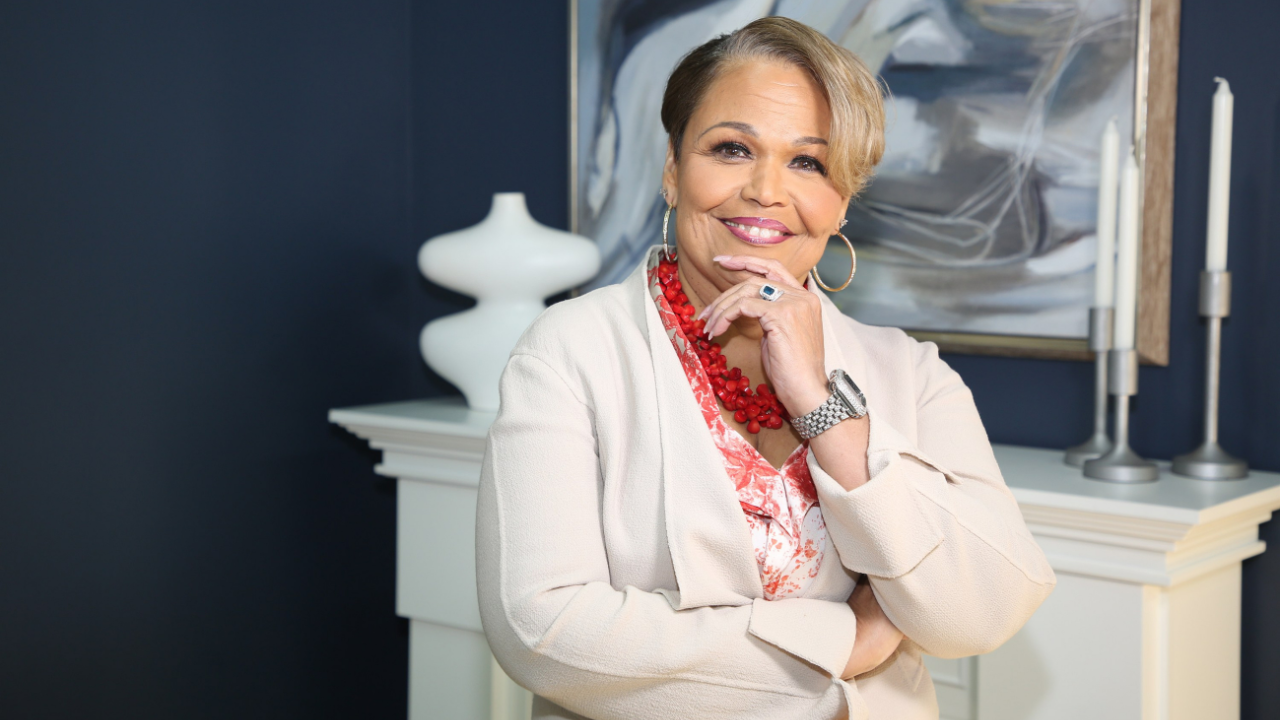
When I first spoke with Dr. Vicki Wright Hamilton, one thing became clear very quickly. Her story has never really been about the titles she has held. It has been about what she could build, who she could help, and who she could bring along with her.
Her journey spans more than four decades across technology, leadership, entrepreneurship, caregiving, and storytelling, but the thread running through it all is remarkably consistent: see the people who are often overlooked, create what does not yet exist, and keep moving forward.
One phrase from our conversation captured so much of how Dr. Vicki has lived and led: ‘Keep going and keep pulling up.’
And the more I learned about Dr. Vicki, the more I realized that might be the simplest way to describe her journey.
From being one of few Black women in technology leadership to becoming an author, entrepreneur, caregiver, and builder, Dr. Vicki’s story is one of faith, purpose, resilience, and making room for others.
Meet Dr. Vicki Wright Hamilton.
The Journey: Purpose, Calling & Becoming
You’ve said that you never built your career around chasing a particular title. Instead, you were often drawn to the difficult problems and assignments that others avoided. What did you see in those challenges that others did not, and how did they shape the leader you eventually became?
I think there are three types of roles in this world. There are builders and creators, there are enhancers, and there are maintainers. We need all three.
When I began my career, I often walked into opportunities that had not existed before. Sometimes it was the first year of a pilot program. Other times it was a brand-new department that needed someone to come in, lead it, and help build it from the ground up.
You also have to remember the time I was coming up in. There were not a lot of women, period, and certainly not a lot of women who looked like me. So, for me, one of the best ways to create my own narrative and tell my own story was to do something somebody else had never done before.
I had enough faith in myself to believe that I could begin it, create it, and build it. And the interesting thing was, there was no measuring stick. It did not exist before, so there was nothing to measure me against. What did success look like? What did failure look like? I had an opportunity to help create those measurements and influence what success would look like.
A lot of people would look at that and say, “Oh my God, they’ve never done this before. What if you fail?” I looked at it differently. Who is going to say I failed, and how are they going to measure that, if there is no measuring stick yet?
So, I always looked at it as the glass half full, not the glass half empty.
You grew up in a family deeply connected to the civil rights movement. Before corporate America ever taught you anything about leadership, what did your family teach you about voice, responsibility, and what it means to create change?
I grew up in a household with leaders who were all about advocating for change. That was what I was exposed to: How do you advocate for change? How do you stand up for what you believe in? And how far are you willing to go?
I watched my parents go a long way and make a lot of sacrifices, so I learned at a very young age that you have to believe in what you are doing, and you have to set your own guardrails around how far you are willing to go. Because the consequence of every action is yours.
Other people can influence you. Other people can do things that are wrong. They can have an impact on you in certain ways. But at the end of the day, how you respond, what you say, and what you do, you own it.
For me, leadership from a very young age meant believing in who you are, believing in what you stand for, being willing to stand up for what you believe in, and accepting the consequences. That is the key: accepting the consequences.
Throughout my life as a leader, I have always asked myself, “What is the worst that could go wrong? Do I believe in this enough that I am willing to stand for that and pay those consequences?” If the answer was no, I did not do it. That allowed me to own my behavior, my decisions, and my actions rather than blaming others.
My mother also taught me something that has stayed with me throughout my life. I was coming up in a predominantly male industry where there were not many people who looked like me, and I absolutely experienced racism and things that were wrong. But she would never allow me to take the behavior of one person and apply it to an entire group of people.
She would remind me that there were just as many white people who stood beside us and supported us as there were people who did not. You can acknowledge that someone’s behavior is wrong, but you cannot put an entire race into one category because of that person’s actions.
We do not want people to put us all into one bucket, so we cannot do that to other people either. She taught me to evaluate every person and every situation on its own merit. I have carried that with me throughout my career.
At 24, during childbirth, you were brought back to life, an experience you describe as the beginning of your “second life.” You’ve said that experience gave you a calling to help people who were overlooked. More than four decades later, how has that calling shaped the way you have lived, led, and served others?
For me, it was not just about losing my life on that table. It was the experience and the vision I had during that time.
I saw what I describe as the Pearly Gates. I saw something I had never seen before and still cannot fully describe. It was the most beautiful place I had ever been. I saw God on a horse, and I wanted to go in, but I could not. What I heard was, “You can’t, but here’s your job. Your job is to go back and help all of those who get overlooked. You take care of them and do what you can, and I’m going to take care of you.”
That experience gave me a faith that, for me, needs no other validation. And throughout my life as a leader, that has meant understanding that this is not about me. It is about everybody else.
I was never the person saying, “Look what I did. Look what I accomplished.” I never went after awards. I never kept score. I just did the work and kept moving.
There have been times when people have reminded me of things I did for them that I did not even remember. I once had a former mentee call me when I was between roles and tell me, “I don’t know what you’re looking for or what your plans are, but I know about a role that needs you, and you need to get in there ASAP, like yesterday.” She told me about the opportunity, I pursued it, and I ultimately ended up taking the role.
She told me, “I remember what you did for me, and I will never forget it. That is how my career started.” And I said, “I did what?” I honestly did not remember. “How do you remember that? I don't even remember doing it.”
I have never been one to keep tabs. I've never been one to keep score. Whether it was helping someone, accomplishing something on a project, or opening a door, I just kept going.
Keep going and keep pulling up. Keep going and keep pulling up. That is all I knew I was supposed to do.
What I have had to learn, though, is that serving and giving does not mean you can never receive. Even today, it can be hard for me to accept compliments. Receiving has been difficult because all I knew was that I was supposed to serve and give.
I had to learn that it is okay to receive, too. I do not always have to be on the giving end.
Taking Up Space, Then Making Space
You built your technology career at a time when there were very few women, particularly Black women. You’ve spoken about knowing that sometimes your presence in the room represented something bigger than just you. How did you navigate that responsibility while still making sure you were seen for your work, your results, and who you are as a leader?
One of the biggest influences on how I learned to navigate those spaces was my mother. She used to always tell me, “They can’t tell you that you’re wrong if you do it the way they taught you to do it, because then it’s their recipe and not yours.”
That stayed with me.
Whenever I approached something new, I would bring my own flair to it, but I would still follow the process and the steps they had given me. Then I could say, “After all, you taught me this. You told me these were the steps that had to be done.”
I still owned my part in the work and how I interpreted the process, but it made people pause before they dismissed me. If it was their methodology, how could they immediately tell me I was wrong for following it? They might still give me feedback or say something needed to change, and that was fine. Feedback is different from someone cutting you down, refusing to hear you, or dismissing what you have to say entirely.
So, I learned early how to get through some of those hurdles using those techniques.
The other thing is that I was never satisfied with being the only one sitting at the table. I was always asking myself, “What does it take to get the next person at this table too?”
I will never forget sitting around a boardroom table during a conversation about diversity initiatives. I made a comment about some things we could do to bring more diversity into the organization and help us reach the goals we were trying to achieve.
One of the men in the room said, “We’re not just trying to check a box. We want to find more exceptions like you.”
And I said, “I’m not an exception.”
I told him, “There are many more people who are just like me, and better. You just haven’t found them. I’m only an exception in your book because I didn’t allow you to tell me no. I kept going.”
That experience reinforced something I had already learned. I learned what it took to play the game. I learned where the credit needed to go, when egos needed to be stroked, and when the timing was right to have certain conversations.
But I never let that intimidate me.
That is where my faith comes in. I knew I was working for a bigger purpose and for someone bigger than me. I believed that no matter what happened, I would be taken care of because He had promised me that.
Something that stood out to me when we spoke was that you did not just want to get through the door yourself. You wanted to pull others through with you. What does it really take to create opportunity for other people while you were still navigating barriers of your own?
For me, it starts with not focusing only on yourself.
Even when things were difficult for me, one of the ways I got through my own challenges was by doing something to help somebody else. It shifted my focus from me to them.
You are going to have tough days. You are going to have hard times. Things are not always going to go the way you want them to, and there will always be things you have to navigate. The question becomes: How do we navigate it? How do we get through it? And what do we do while we are going through it?
For me, bringing others up was the easy part.
But I also learned that you have to be thoughtful about who you are bringing up and make sure they understand what they are signing up for. A lot of people will say, “I want that position. I want to be there.” And sometimes you have to stop and have a very real conversation.
Are you ready for what comes with this? Are you willing to make the sacrifices that may be required? Are you ready for the responsibilities, the expectations, and the things you may have to give up?
Because if you are not ready for those things, that does not mean there is anything wrong with you. It may simply mean this is not the role you really want. Maybe there is another path that is a better fit.
I have always tried to be very authentic and real about that. If something is not right, I am going to tell you it is not right. If I do not think something is going to work, I am going to tell you that too. If there are challenges, I am going to lay those challenges out for you and let you make your own decision.
I think we owe that to each other.
If we are going to help one another, create opportunities for one another, and move each other forward, then we owe each other transparency and authenticity.
Beyond the Game Face: Identity, Storytelling & Authenticity
Across your books, television work, and The Diary of Successful Black Single Mothers, there is a recurring thread of bringing forward stories that might otherwise remain unseen. When did you realize that storytelling itself could be a form of leadership?
I spent a long time in the cable and entertainment industry, so I was exposed to storytelling through broadcast and then later through digital platforms. But for me, storytelling has always been about more than media.
I have always believed that God expects us to share our testimonies and the things we have gone through, because you never know who your story might bless. You have no idea whose life you may be changing, whose life you may be impacting, or where your experience might make a difference for someone else.
When I created my first television show, the entire purpose was, “How can I help these businesses be seen? How can I help people understand what they do, what they offer, and give them a platform to get their word out?”
Then, when I created another show focused more on lifestyle, career, health, community, family, and finances, I was asking a similar question: How can people hear these stories, be inspired by them, and walk away with something that helps them solve a challenge or move forward in their own lives?
That has really been the common thread in everything I have done.
I have never looked at any of these platforms as being about me. It has always been, “How can I use this to help somebody else?”
I honestly do not know how to think about it any differently. I do not know what it looks like to only do something for myself. The seeds were planted in me very early, through my childhood and through the experiences I have had throughout my life. Service simply became the expectation.
I also learned that helping people requires discernment. Sometimes you have to know when to say no. You also have to recognize that just because you want to help somebody does not mean they want to help themselves.
One of the biggest lessons for me came when I had to let someone go whom I truly adored. I loved this person. They were like family to me. But they were not doing the job.
There was a standing joke about me as a leader at one of my companies: “You would fire your mother if you had to.”
And I said, “You’re right. I would fire her, and then I would call her that night and say, ‘Okay, now we need to go find the right job for you, because that wasn’t it.’”
Because keeping someone in the wrong role is not necessarily helping them. If they are not happy, the company is not happy, and things are not going well, sometimes the most supportive thing you can do is help them find the place where they can actually thrive.
One of your books is called Game Face. Most high-achieving people develop some version of one: the face that gets through the meeting, the setback, or the room where you feel you cannot afford to appear uncertain. What parts of your own “game face” protected you, and what parts did you eventually have to unlearn to become more fully yourself?
When I think about Game Face, the first thing I have to say is that I did not want to write a book. Let’s be really clear. I had no intention of becoming an author. None. Zero.
But my mother and my brother kept telling me, “Your story needs to be told.”
And my answer was always, “Why? Nobody is going to read my book. Why would they care about my story? There are billions of books out there. There are celebrities and household names. Who is going to pick up my book? Why am I going to spend my time doing this?”
My mother looked at me and said, “Let me remind you of something. If it isn’t but one person who reads that book and you change their life, it’s worth millions, even if you only get pennies.”
She told me, “You don’t know who you’re supposed to impact or how you’re supposed to impact them. WRITE THE BOOK!”
So eventually, I said, “Okay, I’ll write the book.”
But then I had another decision to make. Was I only going to talk about my professional journey, or was I actually going to talk about me?
And I realized that I would not be authentic to what I believed God had asked me to do if I did not share the good, the bad, and the ugly. Personally. Professionally. All the way around.
So that is what I did.
I shared the good, the bad, and the ugly.
And the reactions were on both sides of the spectrum. I had people tell me, “Oh my God, I started your book and couldn’t put it down. I cannot believe what you have been through.”
Then I had other people say, “Why would you put your dirty laundry out there like that? You shared too much. This isn’t going to do you any good.”
And my answer to the people who thought I shared too much was, “I didn’t do this for you. I did it for Him. And in His book, there is not too much. Maybe not enough.”
Because if one person can see themselves on that page and know that if I can make it, you can too, then there is hope. There is an opportunity to make an impact and create change.
That is what my dash is all about: helping the unseen be seen and providing opportunities where I can make a positive impact.
That same philosophy carried into The Diary of Successful Black Single Mothers. I was working with a group of single women who had incredible stories of triumph, and I kept thinking, “The world needs to know how great you are. We need to tell these stories.”
I had been a single mother too, so we began telling those stories. And when women came back after seeing the documentary and said, “Oh my gosh, how did they do this? How did they get through it?” that was the impact.
Even when I was funding these projects myself, paying the studio, paying for production, doing whatever it took, I did not think about it as, “Look at what I am spending to make this happen.”
I just did it.
My prayer is that whether those stories were told yesterday, today, or tomorrow, they continue to positively impact lives. I hope they give hope and dreams to people who feel like they have reached the end and cannot keep going.
Technology & AI
You’ve lived through several generations of technology transformation, from enterprise IT and digital operations to today’s AI era. The technology keeps changing, but people are still people. What do leaders continue to get wrong every time a new wave of technology arrives?
Here’s the deal: every time a new technology comes along, we believe it is going to fix everything. It is going to make things faster, easier, cheaper, better. And we tend to think about technology on one end and the dollars on the other.
What we forget is everything in between.
And unfortunately, between technology and dollars are the people.
How are they going to adopt it? How are they going to change? What role do they play in it? How does it actually work in their environment? What is going to make it successful?
Because I do not care what business you are in. A human is your customer.
Whether you are selling a product or a service, a human is consuming it. A human is using it. A human is making the decision to invest in it. Even if the product itself goes directly into technology, somewhere in that process there is still a human.
That is why I always ask leaders: Why do we forget about the human?
When a new technology comes out, we want it to solve everything so quickly that we forget the people who actually have to use it, adopt it, and make it successful.
And those people are ultimately going to determine whether you get the return you are looking for. They influence your ROI, your revenue, your profits, your market, and your customer impact.
So, at the end of the day, forgetting the people is forgetting why your business is there.
Leaders absolutely should be focused on outcomes. Are we growing market share? Are we helping customers? Are we achieving the results we expected? Those things matter and should never be ignored.
But it is not instead of the people. It is and the people.
That is something I talk about a lot when it comes to AI. I tell leaders that before we talk about AI, we need to AIM before AI.
What are we going to Automate?
What is the Impact?
And what Must remain human?
Those are the three things I believe leaders need to think through before moving forward.
What exactly are you automating? What are the rules around it? What will the impact be? What happens when there are unintended consequences or challenges? Who is accountable?
And then there is the most important question: What must remain human?
What are those things you are not willing to outsource? What are the things that still require a human to do them? And where does human validation remain critical?
Because that human role, especially in the validation process, is critical.
AI is increasingly entering some of the most personal and vulnerable parts of our lives, including health and caregiving. As someone who has worked at the intersection of technology, leadership, and now caregiving, how do we make sure innovation remains human-centered rather than simply technology-centered?
When I sat down to build PeacefulCare.ai, it came directly from my own caregiving experiences and the challenges I had lived through. One thing I knew from the beginning was this: taking care of the caregiver is just as important as taking care of the person they are caring for.
I wanted there to be a part of the platform that was focused specifically on the caregiver. A place where they could get tips, meditate, relax, listen to music, and sometimes simply be reminded, “You have permission today to say no.”
You also need permission to say, “I need help. Somebody help me. I’m not weak. I just need help.”
Caregiving can be incredibly lonely. People call and ask, “How is the patient doing? How is your loved one doing?” And you say, “They’re doing okay.”
Then someone asks, “How are you?”
And the answer becomes, “I’m fine. I’m just doing what needs to be done.”
But sometimes you are not fine.
Sometimes you did not sleep the night before. You are exhausted. You are irritable. Your back hurts because you had to lift someone. Or maybe you love the person you are caring for deeply, but they are driving you crazy that day.
You need a safe place where you can say those things. There has to be a place in the system where you are allowed to just be you.
That was very important to me.
I wanted PeacefulCare to combine the technology, the information, the knowledge, the trends, and the reporting so that caregivers did not have to carry everything around in their heads. But I also wanted there to be a place for the caregiver themselves.
I have lived through so many different caregiving scenarios. I have been through situations where someone was placed in hospice and we were told they were not going to make it, and then they lived another three or four years. I have been through situations where we were told someone would not walk or talk again, and later they were walking, talking, and taking showers with some assistance. And I have also lived through those moments when you are told there is nothing more that can be done.
Caregiving comes with all of those emotions, all of those triumphs, and all of those difficult moments. Being able to deal with that entire experience is critical.
That is why I wanted a holistic approach.
For me, it was never just about having a widget that remembers something or a report you can print. It was also about removing some of the emotional and mental burden.
If the doctor asks, “When did the headaches start?” and you cannot remember whether it was yesterday or two days ago, I do not want you carrying guilt because you cannot remember one more thing.
How many times do caregivers find themselves in that position?
I wanted the technology to help remove some of that weight.
So, for me, human-centered innovation is not either technology or humanity. It is both.
A Little More Personal
You have spent so much of your life caring for, building for, and creating space for other people. What is one ritual, practice, or small thing that helps you come back to yourself?
If I don’t pray and have my prayer time in the morning, I’m not in the best place. I’m not the best person to be around. I need my time with God.
That is why I get up so early. There were times I would get up at 4:45 in the morning even though I did not have to be at the gym until 5:45. That hour was mine. It was my prayer time, my talk time with God, and my time to prepare myself for the day.
I need that time to rejuvenate. So, my number one priority is that I have to have my me-and-God time.
The second thing is exercise. When I started my workout routine, my family knew that five days a week, I was going to work out. My husband did not worry about me being up early in the morning because he knew I was at the gym. That was simply what I did. It was not, “Can she do it?” or “Will she do it?” It was, “This is something she needs to do for herself.”
A big part of that was giving myself permission to say, “These are the things I have to do for me.”
I look at prayer as getting my spirit right and exercise as getting my body right. But I also think there is another question we do not ask ourselves enough: What are you doing that is simply fun for you?
That is where we often fall down. Those things are usually the first things to get wiped off the list because there is only so much time in a day and there are always other priorities.
For me, I learned to protect the things that mattered most. I also wanted to prioritize my relationship with my husband, so every Friday night is our date night. That date might simply be the two of us sitting on the couch, watching a movie and eating popcorn, but it is still date night. We are not engaging with anybody else. It is our time to talk and be together. Every Friday has been date night for as long as we have been married.
And when the kids were younger, Saturday night was family night. We would do something together, whether it was going to a movie, bowling, or something else.
I think it is important to create the routines and rituals that matter to you and then intentionally work them into your life. It is not always easy to keep them on track. It is not always easy to make them happen.
But you do the best you can.
The BADdest Moment
At Tech She Secures, we talk about being Bold, Authentic, and Driven. When you look across all the versions of yourself you have had to become: technologist, executive, mother, caregiver, entrepreneur, author, and builder, what has been your “BADdest” moment so far, the moment when being bold, authentic, and driven required the most from you, and what did it reveal about who you really are?
Being a mother.
And the reason I say that is because there is so much responsibility that comes with being a mom.
We want the best for our children. We want to guide them. We want to lead them. We want to help them. But one of the hardest things you eventually have to recognize is that they have to live their journey, and it is not yours.
It is almost like seeing a hole in front of them and saying, “There is a hole right there. I know because I have been in that hole. Are you sure you want to jump into it?”
You can tell them what you know. You can give them information. You can guide them. But if they make the decision to jump into that hole anyway, then the challenges that come with that decision are part of their journey.
And that is hard.
You do not want your child to go through something you believe you could have helped them avoid. Especially once they are grown, though, you have to recognize: You own your decisions. You are not a child anymore. All I can do is tell you what I know, give you the ins and outs, and share my experience. At the end of the day, you are going to make your own decision.
Sometimes they make that decision and you are sitting there thinking, “Oh God, I wish they had not done that. I know what is coming.”
But they have to live through it. That is theirs to live through, not yours.
And I think there is a leadership lesson in that too.
You can guide the people on your team. You can give them information. You can share what you have learned. But at the end of the day, every person owns their own actions.
Someone may disagree with you and say, “No, I do not believe it should be that way. I believe it should be this way.” You have to respect that they own that decision.
We cannot live somebody else’s life for them.
Just because my journey turned out one way does not mean someone else’s journey will turn out the same way. When you are trying to guide someone, all you really have to offer is your own experience. You can share it, but you also have to respect their guardrails, their choices, and their decisions.
That is difficult in leadership, but home is the hardest because you want the very best for the people you love: your children, your grandchildren, your spouse, your parents, your siblings, your family.
You want the best for them. And that is why it is the hardest.
For the Tech She Secures Community
So much of your journey has been about seeing possibility where others saw barriers, whether that meant taking on the assignment no one wanted, navigating rooms where you were underestimated, or building something that did not exist yet. What would you want someone in the Tech She Secures community who feels overlooked, underestimated, or uncertain about their next chapter to hear from you?
The first thing I tell people I coach and mentor is this: you own your journey, and you own your dash.
Every plan you put together should come back to that. How am I living? What am I doing with that dash? What do I want the story at the end to say?
Sometimes it helps to ask yourself, “What do I want the final narrative to be?” Because that can guide the decisions you make along the way and help make sure the story you are building is actually the story you want to tell.
But I also tell people this: If you do not believe in you, why should anybody else believe in you?
Whatever part of yourself you believe in, no matter how small it may seem, own it.
As you grow, learn, and experience more, you will become more confident and more comfortable doing more and saying more. You do not have to have everything figured out from A to Z before you begin.
Maybe all you know right now is, “I am really good at this one thing. This one little piece, I know I do well.”
Start there.
Capitalize on it. Leverage it. Let other people see it. The more comfortable you become owning what you do well, the easier it becomes to talk about it and share it. And when you are comfortable talking about it, it becomes easier for other people to hear it too.
You know yourself better than anybody else.
So, stop thinking it has to be about quantity, years of experience, a title, or having this huge list of accomplishments. It can start with one sentence and one step.
We crawl, then we walk, then we run.
Everybody has something.
Maybe your thing is, “I make the best pound cake there is.” Okay, then own that. You make the best pound cake. What can you do with it? Maybe you start talking about baking. Maybe you start sharing recipes. Maybe you write about what you know. Just start there.
Then maybe you learn how to make the meal that goes with the pound cake. Now you have something else. Then you figure out the drinks that go with the meal. Now you have all three.
You build from there.
It does not have to be complex. We make it complex.
Start with something small. Believe it. Own it. It is yours.
Then take the next step.
Closing Reflections
I had goosebumps more than once listening to Dr. Vicki tell her story.
Not because every chapter was easy or perfectly planned, but because of the way she has continued to move through each one with so much intention. Building when there was no blueprint. Speaking when it would have been easier to stay quiet. Making space for others while still figuring out her own next step.
There was so much wisdom in the way she talked about life, leadership, motherhood, and simply owning your journey.
And I think there is something beautifully simple in that.
You do not have to have it all figured out.
Start with what you know. Own it. Take the next step.
And keep pulling up.
Dr. Vicki, thank you for being so open and for trusting me with your story. I truly loved this conversation, and I am so grateful for the honesty, wisdom, and generosity you brought to it.
Maliha
Disclaimer: The content on this blog and website reflects a combination of my personal experiences, perspectives, and insights, as well as interviews and contributions from other individuals. It does not represent the opinions, policies, or strategies of any organization I am currently affiliated with or have been affiliated with in the past. This platform serves as a personal space for sharing ideas, lessons learned, and meaningful reflections.
