Staying Human: Romey Imam on Leadership, Integrity, and Choosing Peace
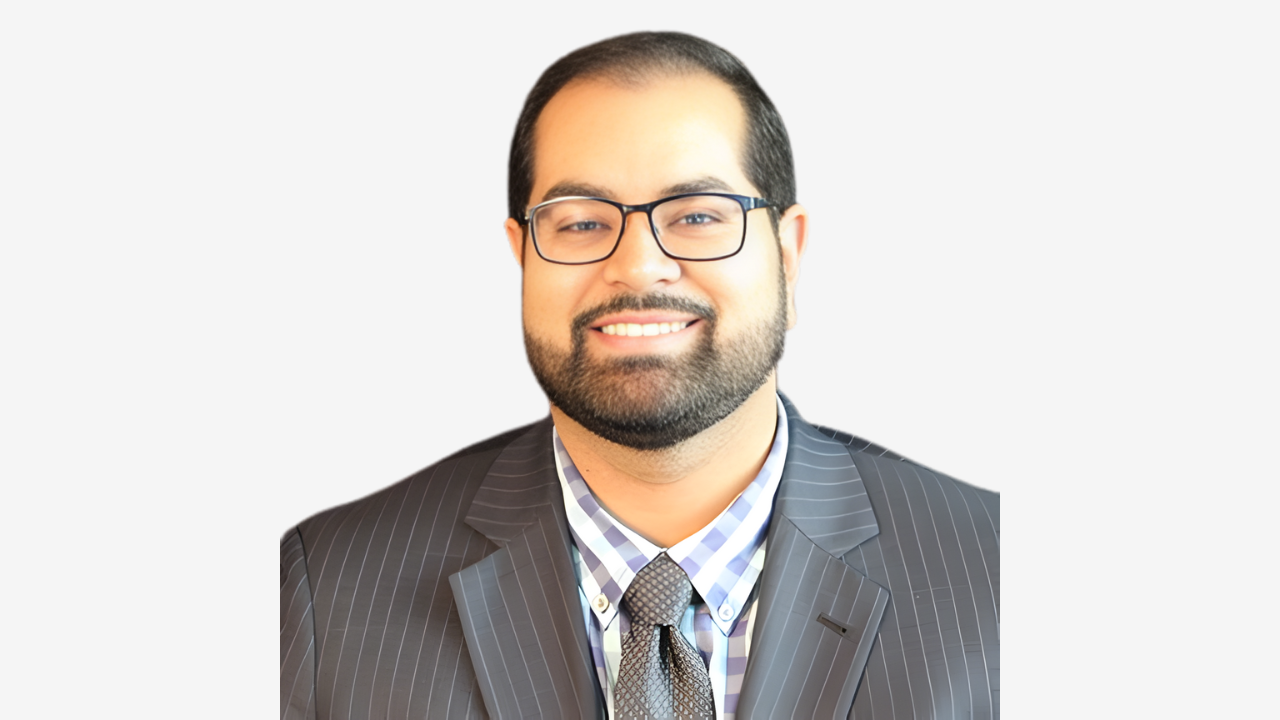
There are people whose presence stays steady across seasons of life. Romey has been one of those constants for me.
We studied together during our master’s program, back when we were all trying to figure out who we were becoming. Even then, Romey carried a calm, grounded presence. Thoughtful. Observant. Always paying attention to the people around him. As our careers evolved and life added new layers, that core never changed.
What has always stood out to me about Romey is that his leadership did not begin in cybersecurity. It began in service. Long before titles, consulting work, or security frameworks, he was working with students in under-resourced schools, learning what it meant to motivate, guide, and truly see people. That foundation shaped how he leads today, how he builds trust, and how he defines success in a world that often prioritizes status over sanity.
This conversation is not just about cybersecurity or leadership in high-stakes environments. It is about faith, integrity, people, and the courage to redefine success as life changes. Romey brings honesty, humility, and a deep respect for the human side of our work, and that is exactly why I wanted to share his story here.
Roots, Purpose, and Perspective
You’ve always had a strong sense of purpose and service, long before titles or roles came into the picture. Where do you think that grounding comes from, and how has it shaped the way you move through your career today?
Education has always been a huge part of who I am, and in a lot of unexpected ways. Going back as far as 2nd grade, I had always wanted to be a teacher - not because I loved teaching or education, quite the opposite. I was actually a sub-par student for most of my life. After college, I counseled in low socio-economic high schools for about 5 years. Education drove a spike through my personality for two reasons: passion and motivation. I learned that I thrive in spaces where I am surrounded by people who are as passionate as I am, and the education space generally attracts people who are passionate about it, because why else would you be paid below the median per capita salary to work 90-hour weeks. I also learned that if you can tap into someone’s motivation - the drive behind who they are or who they want to be - you can get them to do amazing things. Being a counselor really crystallized these ideas in my mind - being able to guide and direct young minds to operate at and beyond their potential by driving at the root of their passion was a powerful experience, and it’s something I’ve carried with me throughout my time in cyber.
We go way back to our university days, and I’ve watched you consistently show up for others in meaningful ways. Looking back, what experiences early on helped shape the leader you are now?
I like helping people, no matter what they’re going through, so having that innate desire to “make the world a better place” definitely helps, but that can only take you so far. I had leaders early in my education days and early in my cyber career take chances on me, and those are my role models for how I operate. I think the term is “servant-leadership”, but these leaders truly embodied the idea of leading by enabling and growing your people. These are leaders that understand how to show up for their people, meet them where they are, and help lead them to the next level. I had the opportunity to build relationships with these leaders and understanding how they operate really informed my own philosophy as a leader, if you can call me that hah.
Building Impact Through People and Trust
You’ve worked across consulting, compliance, and security, but what really stands out is how people trust you. What do you think has helped you build such strong, lasting relationships throughout your career?
In my experience, people are used to being deceived. People across all walks of life have what I call a trust wall constructed in front of them that they use to protect themselves from…everything. At our core, people want to trust, but we also understand the stakes of trusting, so I try to meet them where they are, be vulnerable and open, and demonstrate to them, not just with words but with actions, that I’m for real. Every interaction that takes a brick out of their trust wall is one step closer to building a relationship. Relationships in Cyber are like relationships anywhere else - bilateral and require vulnerability. If you want someone to trust you, you have to trust them first.
You’ve often taken on roles where you’re supporting teams, clients, and organizations through complex or high-pressure situations. How do you balance being dependable for others while still protecting your own energy?
If history serves, I don’t. Protecting my energy is the single greatest area of personal growth for me. We’re all a work in progress aren’t we? :)
In your experience, what does good leadership actually look like in practice, especially in environments that are fast-moving or high stakes?
In my limited experience, I’d have to say sincerity is the key success factor in high stakes environments. Especially in those environments, it’s so easy to get lost in metrics and delivery that you lose sight of the fact that the people are and always will be your most valuable resource. The leaders who remember this, especially when the ride gets bumpy, earn loyalty from their people, and in today’s climate, that’s not an easy commodity to come by. Trust is always going to be difficult to earn and easy to lose, and the leaders who remember that are the ones that, in my opinion, go the distance.
Growth, Values, and Staying Grounded
You’ve navigated different industries and stages of your career with a strong sense of integrity. What values have guided your decisions the most along the way?
My faith puts a strong emphasis on honesty and operating above board, and while that may seem like faith and cyber are two worlds apart, you and I both know that we are always operating in the gray. Nothing is ever black and white and so it’s really easy to sacrifice integrity in an effort to impress your client or your boss. But those wins will always be short lived. If you can demonstrate that you can consistently operate with a high degree of integrity, the trust you build with your teams, leaders and customers will take your further than you could imagine.
When things feel challenging or uncertain, what helps you stay grounded? Are there habits, routines, or perspectives that help you reset?
My routines are largely dictated by my two kids, which is to say they are entirely arbitrary, so navigating uncertainty became more challenging by a couple degrees when they came into my life. That said, two guiding lights have, especially in recent past, dictated how I operate in challenging times.
The idea that “This too shall pass” . Nothing is permanent. Everything is transient. Good times and tough times alike are the same in that they are temporary and you can power through.
The idea that everything happens for a reason. This is again rooted in my faith, but throughout my life, uncertainty has always been the most challenging obstacle. It’s paralyzing, and in a world with minimal safety nets, that can be terrifying. But knowing that everything happens for a reason - even if we don’t see the wisdom in it, even if it seems like there is no possible way for this to end well - has given me the strength to allow myself to power down for a minute, focus on one thing at a time, and let the cards fall where they will. There are things I can control, but the list of things I can’t control is much, much longer, so allowing myself the grace to accept that was critical to staying sane.
Community, Inclusion, and Redefining Success
You’ve always led with empathy and intention, and you’re someone people naturally gravitate toward. What does inclusion truly mean to you, and how do you try to live that value in your everyday work?
Simply put, inclusion to me is allowing for the possibility that I’m wrong. At the end of the day, I’m human, and therefore imperfect and flawed, and like I said above, we operate in the gray. The more opinions I can surround myself with, the better off everyone will be. DEI across industries has been fighting for creating space that is accessible for people from all walks of life, and that’s a very important mission. In my experience as a male and therefore a person with privilege, I have found that operating in an inclusive way has only made me better, and I think that’s a point that people in privileged arenas tend to miss. Inclusivity is definitely about making sure all the voices are heard and given a fair shake, but the benefits of doing so are not just benefitting the voices that are historically silenced - they’re also directly benefitting the ones that have historically been doing the silencing.
In a world that often measures success by titles and titles alone, how do you personally define success today? How has that definition evolved over time?
In a word, sanity, and that definition was very VERY different 10 years ago. Way back, I had the same goals that everyone has - break into cyber, get a great job, work up the ladder, become a director or a VP and make big important decisions and get paid a lot of money to do it. But at the stage of life I’m in right now, none of that makes sense. In the last 2-3 years, my priorities make a marked shift towards sanity and peace. My kids aren’t going to remember the brilliant GRC strategy I put together or how great of a leader I was, but they will remember my absence, and right now, that’s more important than titles or anything else.
Trends, Challenges, and the Road Ahead
You’ve seen the security and compliance landscape evolve in real time. What are some of the biggest shifts or trends in cybersecurity that you think leaders and organizations need to be paying closer attention to right now?
I think there’s a lot of attention being paid to AI right now, and like cloud, I think AI has the potential to change a lot of things, but at the end of the day, the people-component to cyber will still be the most valuable resource we have. The industry is grappling with AI as a game-changer, but as it stands today, AI is still inaccurate 60% of the time (I think). Do we really want models and agentic orchestrations decisioning our cyber programs at a 40% accuracy rate? There’s still a massive hallucination problem, bias has not been solved for in any kind of material way, and yet everyone is talking about it like it’s the silver bullet. It will change things for sure, but if we want to be able to leverage it responsibly to better the cyber space, we need to be training our people how to responsibly leverage its capabilities while still thinking critically and creatively. AI can’t solve for the gray area we operate in (yet).
With so much change across technology with Artificial Intelligence, regulation, and work culture, what do you believe will matter most for security and risk professionals in the years ahead?
I think I said this above, but investing in people has been, will be and still is the way forward when it comes to AI. So many organizations are still using qualitative ways to measure risk. I’ve seen some really cool developments in using AI to enable quantitative risk management, which as you know is THE way into the boardroom, so really looking forward to learning more about that.
For someone early in their career or feeling unsure of their path, what perspective or advice would you want to pass on?
Err on the side of action. Unfortunately, there’s still A LOT of gatekeeping in cyber, which is really unfortunate because there’s so much talent out there. Diversity of experience is so valuable in every space, and cyber is no exception. But breaking into the space is still incredibly difficult, so for folks that are trying, I’ll say this: have faith in the process, and don’t say no to any opportunity. Entry level cyber roles aren’t entry level roles, unfortunately, so the easiest way I’ve see to break into cyber is to pivot from a different IT space, whether its cloud or network or help desk. Don’t say no to those opportunities - use them to pivot.
Soft skills are becoming more and more crucial in all cyber domains - it’s not just a GRC thing anymore. Being able to communicate your expertise in any space is critical to growth and opportunity, so take the time to perfect your elevator pitch, and don’t sleep on your verbal and written communication skills. Hiring managers will almost always choose a person who has solid communication skills over one who doesn’t, even if they’re not as technically savvy.
As you think about the next chapter of your journey, what are you most excited to build, explore, or grow into next?
Honestly, I’m taking it day by day. There’s quite a bit of flux occurring in all markets right now, so I’m focusing on sanity and peace. 🙂
Tech She Secures Signature Question
Tell us about the “BADdest” challenge you’ve taken on — the moment that pushed you, stretched you, and ultimately shaped the leader you are today.
Surprisingly, my counseling days still take the cake on this - sorry cyber, you aint got nothin on being an educator. The challenge of trying to convince a 15-year-old who’s lost everything to bet on themself is and will always be the hardest thing I’ve ever done. Those first 5 years of my career as a counselor shaped so much about who I am and how I operate. They were the hardest years of my career, and I wouldn’t trade them for the world. Those kids taught me more about resilience, grit, and determination in the face of unearthly odds, and faith in people’s humanity despite all evidence pointing to the contrary. I carry those kids with me every day. They truly taught me what it meant to be human, and I will be forever indebted to them for that education.
Closing Reflections
Every Tech She Secures conversation leaves something with me, and this one stayed in a quiet but meaningful way.
Romey reminds us that leadership is not about having all the answers. It is about sincerity. It is about meeting people where they are, operating with integrity even when the path is unclear, and remembering that people will always be the most valuable part of any system we build.
What I appreciate most about Romey is his willingness to say out loud what many of us feel but rarely articulate. That success can shift. That ambition can evolve. That choosing peace, presence, and sanity is not a failure of drive, but a reflection of growth.
This conversation is a reminder that leading in the gray requires courage. The courage to trust first. The courage to stay human in complex systems. And the courage to define success on your own terms, even when the world expects something else.
I am grateful for Romey’s friendship, his honesty, and the perspective he continues to bring into every space he enters. I hope this conversation leaves you feeling a little more grounded, a little more seen, and reminded that it is okay to lead differently.
Maliha
Disclaimer: The content on this blog and website reflects a combination of my personal experiences, perspectives, and insights, as well as interviews and contributions from other individuals. It does not represent the opinions, policies, or strategies of any organization I am currently affiliated with or have been affiliated with in the past. This platform serves as a personal space for sharing ideas, lessons learned, and meaningful reflections.
