Preet Khowaja: Building, Questioning, and Keeping the Whimsy
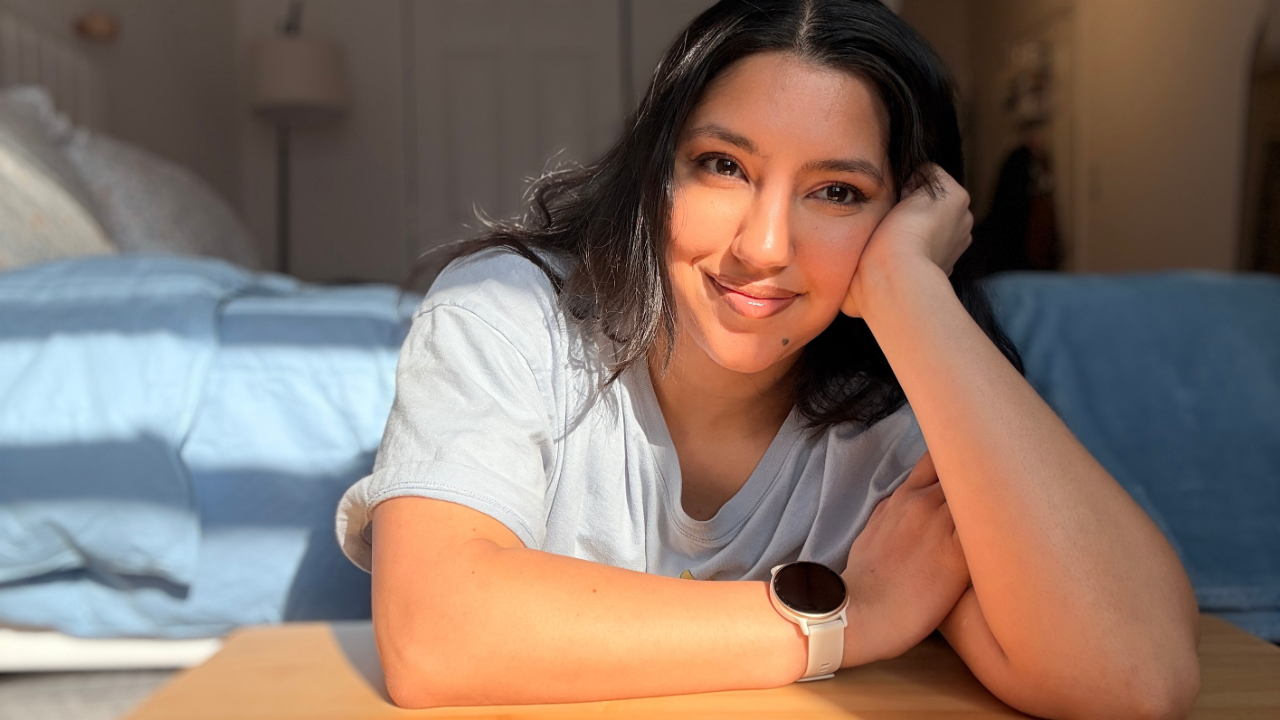
There is something really special about getting to watch someone grow into themselves.
I have known Preet since Pakistan, and I still remember the quieter, nerdier version of her she talks about in this feature. To now see her building a career in data science and AI, finding her voice, sharing so much of herself so authentically, and still holding on to her creative and whimsical side has been such a joy to watch.
What I love most about Preet is that she does not try to fit into one box. She is technical and creative, thoughtful and funny, ambitious and still figuring things out. She is also thinking deeply about how technology can do more than solve problems, including helping preserve the culture, craft, and heritage we come from.
In this conversation, we talk about finding your voice, letting go of perfection, women in STEM, building with AI without losing what makes us human, and remembering that life is also supposed to be fun.
Meet Preet Khowaja.
Journey, Identity & Becoming
When you think about your journey from Pakistan to where you are today, what part of your younger self do you feel most connected to, and what part of her would be most surprised by your life now?
I think the part of me that would surprise my younger self the most is probably the courage. I used to be a very scared teenager and a really timid child. I don’t know if you remember me, but I was very quiet and very nerdy.
To go from that to posting whatever content I want on Instagram, having a full-time job, learning how to dance, and doing all of these things that still feel a little scary, I don’t think I could have imagined as a kid that I would be able to do any of that.
The part of my younger self that I think I’ve held on to is probably the whimsy. As little girls, we loved color and glitter and all these fun things. Now that I work, I’m financially independent, and I can spend money on myself, I find myself reaching for things that remind me of the little girl I was. I literally have friends who buy me Barbie dolls as a fully 29-year-old woman. It’s crazy.
I think that sense of whimsy is something I’ve held on to, and I really want to keep holding on to it.
You have grown across different worlds: Pakistan, academia, tech, social media, data science, and now AI. What parts of yourself did you have to protect along the way, and what parts did you have to grow into?
I think curiosity is something that corporate life can often beat out of you. When I started working, I realized very quickly that the real world outside of school and books is very goal-oriented. People want results, projects delivered, things done.
In the middle of all of that, if you are someone who likes to think deeply and question things, that curiosity can get lost. Sometimes I want to ask, should we even be doing this? Is this really the best way to do it? What are the ethical implications? Is there a more efficient way? I have tried to protect that part of myself because how I think, how much I question things, and how much I want to understand something are very core to who I am.
What I have had to grow into is letting go of perfectionism. I used to want to know exactly how something would turn out before I even started. If I was working on a project, I wanted the finished product to look exactly the way I had envisioned it because I did not want to build something imperfect.
Over time, through both school and work, I have learned that a project can actually be better when it evolves. You start, you learn what is working and what is not, and then you adapt. The first version does not have to be the best version, and I have had to reframe that in my head as a good thing. Letting go of that rigidity and becoming more adaptable has been a big part of my growth.
Along the way, who were some of the people who saw something in you before you fully saw it in yourself, and how did their belief shape the path you chose?
There have been a lot of people, but two really stand out when I think about my journey in math.
In undergrad, I had a math professor who told someone close to me that I was good at math, but I just was not confident in my abilities. Hearing that had such an impact on me. He was one of the first people who made me feel like maybe I really could do this, and that confidence helped me pursue math as my major. Sometimes you really just need someone to believe in you and say, “You can do it.”
But honestly, I owe so much of my math journey to my mom. She never went to college, but when I was little, she would learn math from my third, fourth, and fifth grade textbooks so that she could teach me. She would literally create registers full of math tests from whatever she had taught herself.
She studied so that I could study.
And now, I am the first woman on both sides of my family to earn a master’s degree. When I stop and think about that, it feels really special.
Tech She Secures is rooted in being Bold, Authentic, and Driven. What has been your BADdest moment so far, the moment where you felt most fully yourself, most courageous, or most proud of how far you’ve come?
There is one moment that always comes to mind when I get asked a question like this because it was genuinely such a scary thing for me to do.
When I went into college, I did not know what I wanted to study. Two years in, I decided to major in math. I was never someone who thought of myself as a math genius, and I had also had experiences with older male students who seemed skeptical when I told them I was majoring in math. Somewhere along the way, I think I internalized that and started wondering whether I really had what it took to be a “math person.”
As part of my degree, I had to give a 15-minute senior thesis presentation in front of math professors, students, and anyone else who wanted to attend, and then answer questions afterward. I was terrified. I rehearsed for days. I even wrote jokes into the presentation so I would feel a little more comfortable, and I rehearsed those jokes to the T. At one point, my thesis advisor told me I needed to skip the last practice session because I did not need it. I was like, “No, no, I still want to do it!”
But when I actually gave the presentation, I remember thinking, I am doing such a brave thing. It gave me a newfound appreciation for my ability to communicate something really technical and break it down to its core, especially because not everyone in the audience studied math.
That experience also taught me something about authenticity. Sometimes people use complicated terminology in ways that make ideas feel inaccessible, but our ability to connect with people depends on how clearly we can explain what we mean. How simple can you make something without losing what matters?
That moment felt very Bold, Authentic, and Driven to me. I was doing something that scared me, doing it in a way that felt like me, and it ultimately helped drive me toward data science, which is what I chose to pursue afterward.
Finding Her Voice
One of the things I personally love is your social media. I love how real, fun, and relatable it feels. You have a way of making people feel like they’re not alone in their thoughts, humor, or growing pains. When did you start feeling comfortable sharing your voice publicly, and why did that feel important for you?
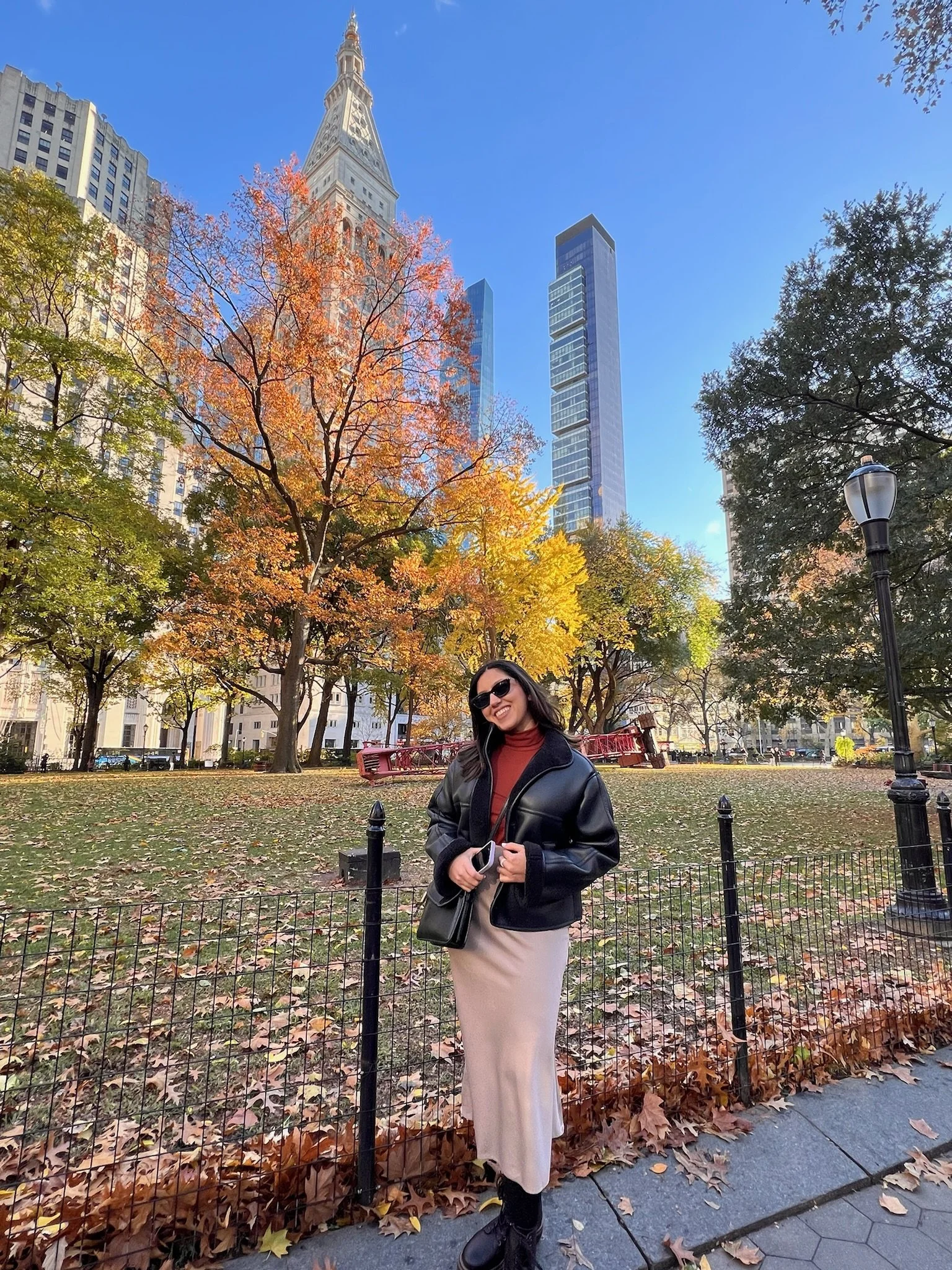
Honestly, this goes all the way back to high school. What you remember me as was exactly who I was until about grade eight or nine. I was very quiet. I remember being passed over for a leadership role at school specifically because I was “too quiet.” They basically said, she has perfect grades, she is disciplined, she has great attendance, but she is too quiet.
That summer, I read “The 7 Habits of Highly Effective Teens”. Now I look back at that book and think, why did this move me so much? But as a teenager, it genuinely changed the way I thought about how I needed to show up.
I realized that if I stayed quiet, I could miss out on opportunities, even if I knew I had the ability to lead. So, becoming more vocal was actually a very conscious choice at first. When I moved into grade ten, I made an effort to speak more and put myself out there.
Then I went to college and thought, I can be a whole different person here because nobody knows me. That is where being vocal, extroverted, and taking on leadership roles really became part of my identity. Eventually, it stopped feeling like something I was consciously trying to do and just became who I was.
And I think that naturally translated to social media. Sharing my voice publicly feels comfortable now, but it started with realizing pretty young that if I wanted to be part of things, lead, and create opportunities for myself, I could not always stay quiet.
For many young women, especially South Asian women, there can be pressure to be polished, careful, or fit into a version of what success is “supposed” to look like. How have you learned to show up as your full self, and what helped you care less about being misunderstood?
That is something I still struggle with, honestly. I do not think I have completely figured it out because the pressure to look a certain way or be a certain way is constant. There are entire industries feeding off women feeling like we need to be thin, fair, have perfect skin, perfect hair, all of it. It is hard to completely tune that out.
But I started noticing that the conversations I had with the women closest to me were never really about how perfect we were at things. We connected over the opposite. It was, “Oh my God, I suck at cricket,” or “That gym class absolutely wrecked me,” or “I have facial hair growing on my chin because I have PCOS.” My younger sister is my best friend, and those are the kinds of things we talk about. We connect over the very human things that are going wrong.
That made me think about how many young women are growing up seeing these facades of perfection online. I have younger women who follow me, including girls from back home in Karachi and younger cousins in my extended family, and I never wanted them to think that how I look on one nice Eid evening is how I look all the time, because it is not.
I think I wanted to show them something I wish I had seen when I was younger. When I first started sharing that way, there was not as much authentic, relatable content online as there is now. Even if my audience was small, I knew a lot of the women following me were my age or younger and struggling with the same things.
So, I think that has always been the motivation. Not pretending that I have stopped caring completely, because I have not, but trying to be real enough that someone else does not feel like they are the only one figuring it all out.
For someone who is still trying to find their own voice, whether online, at work, or in their personal life, what advice would you give them? Where should they start?
I think the best place to start is within yourself. You cannot really find your voice without making time to reflect on who you are, what matters to you, what drives you, and what scares you.
When I was in undergrad, I came back to Pakistan for the summer and created a camp for girls ages 13 to 17 called Mirror Mirror. The idea was to create a space where girls could reflect on their fears, goals, dreams, and experiences, but also connect with each other around things they might not normally talk about.
One of the first activities was literally centered around a huge mirror. Each girl would come up and share two things she loved about herself and two things that scared her. That is where the name Mirror Mirror came from. It was about looking at yourself honestly, but also realizing that other girls around you were carrying fears, insecurities, and experiences too.
I think that experience really reinforced something I still believe, which is that reflection is a huge part of being authentic. Your experiences, your traumas, your life stories, the good, the bad, and the ugly, all shape who you become. But if you never make time to process those things, it is hard to really understand what you believe or what your voice is.
So, my advice would be to start there. Spend time getting honest with yourself first. Your voice becomes much easier to find when you understand where it is coming from.
Building with AI
AI is such a big conversation right now, and you are not just watching it happen, you are actually building with it. What do you think people need to understand more deeply about AI, beyond the hype, fear, or excitement?
I think one thing we need to understand more deeply is what AI might change about the way human beings learn and think.
Every time we adopt a new technology, we gain something, but we also stop exercising certain skills. When smartphones came along, we stopped memorizing phone numbers. With Google Maps, a lot of us stopped memorizing routes. Those technologies obviously brought huge advantages, but there was still something we stopped doing for ourselves.
I worry AI could take that much further. It is not just about opting out of simple tasks. If we rely on it too much, we can start losing the ability to do those things ourselves, whether that is writing a well-structured email, thinking through a problem, or understanding the details behind something we are creating.
I see this in my own work because I both work with AI and build with it. The tools can make things incredibly easy, and the quality can be so good that it becomes tempting not to pay attention to what is happening underneath. If you are not careful, it can start to feel a little Frankenstein-ish. You have created something powerful, but you do not fully understand the thing you created or how it works. That is the part I think we need to be more thoughtful about. AI is an incredibly powerful tool, but we should not let using it come at the expense of our own ability to think, learn, create, and understand what we are doing.
As someone who brings together technical skill, creativity, and a strong personal voice, what kind of future do you hope to help build through tech?
I think there is so much opportunity to use technology for people in Pakistan and across the developing world, especially women. With AI, that possibility becomes even bigger. A lot of the work we see today is concentrated in areas like finance, retail, and businesses in the U.S., but I think there is still so much unexplored potential for AI to be used for social good, whether that is healthcare, social justice, or helping women access legal information and resources.
But something I have been thinking about a lot more recently is how technology could also help preserve culture.
Pakistan has such a rich tradition of textile art, from shisha embroidery and Phulkari to Ajrak, Zardozi, chikankari, and so many other forms. But some of that is getting lost in what I call the “fast-fashionification” of fabric. People around the world may wear something inspired by these traditions without knowing what it is called, where it came from, or the history behind it.
Since I started crocheting, I have thought about this even more. I saw how something like amigurumi, a Japanese form of crochet, could be made accessible to people through kits, tutorials, and technology while still connecting people back to where the craft came from. It made me wonder, what could that look like for South Asian textile art?
You cannot simply digitize a textile and say you have preserved the art, because so much of the art is in the process of making it. But could technology help preserve that process, teach it, document it, and bring it to people around the world in a way that keeps its identity and history attached to it?
That is the kind of future I would love to help build. One where we use technology not only to make things faster or more efficient, but also to preserve what makes us human, including our art, our culture, and where we come from.
Women, Diversity & Representation
You’ve shared that you care deeply about inclusivity for women in STEM, especially in math and technology. What do you think young women actually need more of in these spaces: mentorship, confidence, access, community, role models, or something else?
I do not know if I can speak for exactly what young women today need, because so much has changed. There is more access to information, technology, conferences, mentorship, and resources than there used to be.
But I think one thing that has not changed enough is this underlying belief that technology, math, and computers are somehow spaces reserved for men, or that men have some natural ability in these areas that women do not.
That mindset has to be challenged much earlier than college. It needs to start when girls are young. We should not only teach students about male mathematicians and scientists. There have been incredible women in these fields too, and girls need to see that. Math and technology should be treated as gender-agnostic. Being technical does not make something inherently masculine, just like being creative does not make something inherently feminine. Math itself requires creativity, problem-solving, and critical thinking.
And the representation gap is still very real. My master’s program actually had more women than men, but in the company I work at now, there is only one other woman working in technology. So sometimes I genuinely wonder, where are they? Where are all of these women going between studying these subjects and entering the workforce?
I think that is part of the conversation we still need to have. It is not only about getting women interested in STEM. It is also about making sure they can see themselves belonging there, staying there, and building careers there.
When you think about the next generation of girls from Pakistan, South Asia, or any community where they may not always see themselves represented in tech, what do you hope they learn from your story?
More than anything, I would hope they learn not to box themselves into being one kind of person or another.
Sometimes a path can feel closed to you simply because you have not seen someone like you take it before. But that does not mean it is actually closed. You might be the first person you know to do it, and that is okay.
I think the biggest thing is to believe that whatever it is you want to accomplish, the world really can be your oyster.
And honestly, I still feel like I have so much left that I want to do. Sometimes I do not stop to take stock of how far I have already come. So maybe that is part of the lesson too, to keep looking ahead, but also remember to recognize your own growth along the way.
Beyond the Work
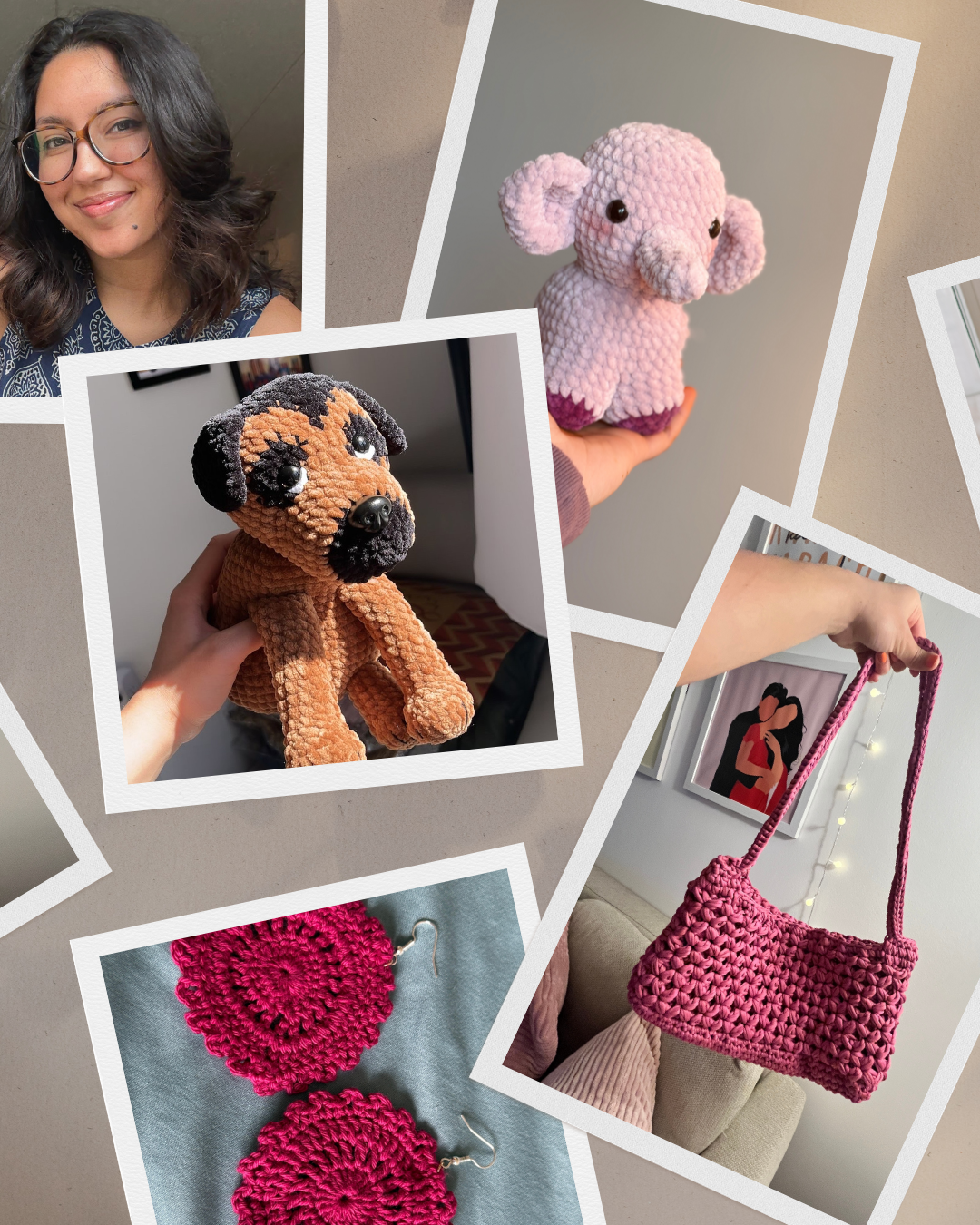
When life feels overwhelming or noisy, what is one self-care ritual, routine, or small joy that helps you feel like yourself again?
I wish I could say there is just one, but honestly, it changes depending on the season of my life.
For a long time, it was dance. Dance really was the fuel that gave me the strength to keep going. Over time, strength training became another big one for me. There is something about feeling physically strong that really grounds me.
And then there is crochet. I joke that it is my grandma hobby, but I love it. I have made bags, I am working on a blanket, and there is something so satisfying about using your hands to slowly create something. It forces you to focus on what is right in front of you. I think that is also why I am drawn to other creative things, whether it is some kind of craft, reading a book, or honestly, sometimes just taking a really good hot shower.
I think the common thread is anything that brings me back into the present moment. When life feels overwhelming or anxiety starts taking over, I need something that grounds me in what I am doing right now. That is usually what helps me feel like myself again.
The Road Ahead
You have already built such a unique path across data science, AI, creativity, and storytelling. When you think about the next version of yourself, what are you most excited to grow into, and what kind of impact do you hope to create?
I think, ironically, the next version of myself is actually about going back to how I started.
As I have gotten older, I have become more self-conscious about what I put out there, especially on social media. I think more about how I present myself, what something is going to look like, or whether it is going to be successful. And somewhere in that, I lost a little bit of the carefree part of creating.
So, I want to become more carefree again, maybe a little more deluded and happier about the process. I want to create because creating is fun, not because I am chasing an aesthetic, followers, metrics, or some version of external success that may or may not even exist.
I think we forget sometimes that life is meant to be fun. Creating is meant to be fun. Even tech is meant to be fun. So, the thing I am most excited to grow into is someone who finds that joy again and protects it.
And if something I create happens to mean something to someone else along the way, that makes it even more meaningful.
Closing Reflections
I knew Preet would have a lot to say. I did not expect her to make me rethink what innovation can look like.
There were several moments in this conversation where I genuinely sat back and thought, wow. Her answer about using technology to preserve Pakistani textile traditions, craftsmanship, culture, and heritage was one of them. It made me think about innovation differently. We talk so much about building what is next, but there is something equally powerful about using technology to protect what we do not want to lose.
I also found myself thinking about how much I admire the way Preet refuses to be one thing. She can care deeply about AI and still question what it might take away from us. She can love math and crochet. She can be ambitious and still protect joy, creativity, and her whimsical side. And honestly, I think that is what I love most about her perspective. She reminds you that you do not have to choose one version of yourself.
Preet, thank you for trusting me with your story. I am so proud of everything you have already accomplished, and even more excited for everything you are still going to do. Having known you since Pakistan and getting to watch you grow into your voice has been really special. I hope you keep questioning, creating, experimenting, and having fun along the way.
And if you are not already following Preet on social media, you really should. Her content is funny, honest, thoughtful, and refreshingly real. In a world that can feel overly curated, her voice is exactly the kind I want to see more of.
Maliha
Disclaimer: The content on this blog and website reflects a combination of my personal experiences, perspectives, and insights, as well as interviews and contributions from other individuals. It does not represent the opinions, policies, or strategies of any organization I am currently affiliated with or have been affiliated with in the past. This platform serves as a personal space for sharing ideas, lessons learned, and meaningful reflections.
