Built to Evolve: Mushyada Ali on Growth, Motherhood, and a Life of Learning
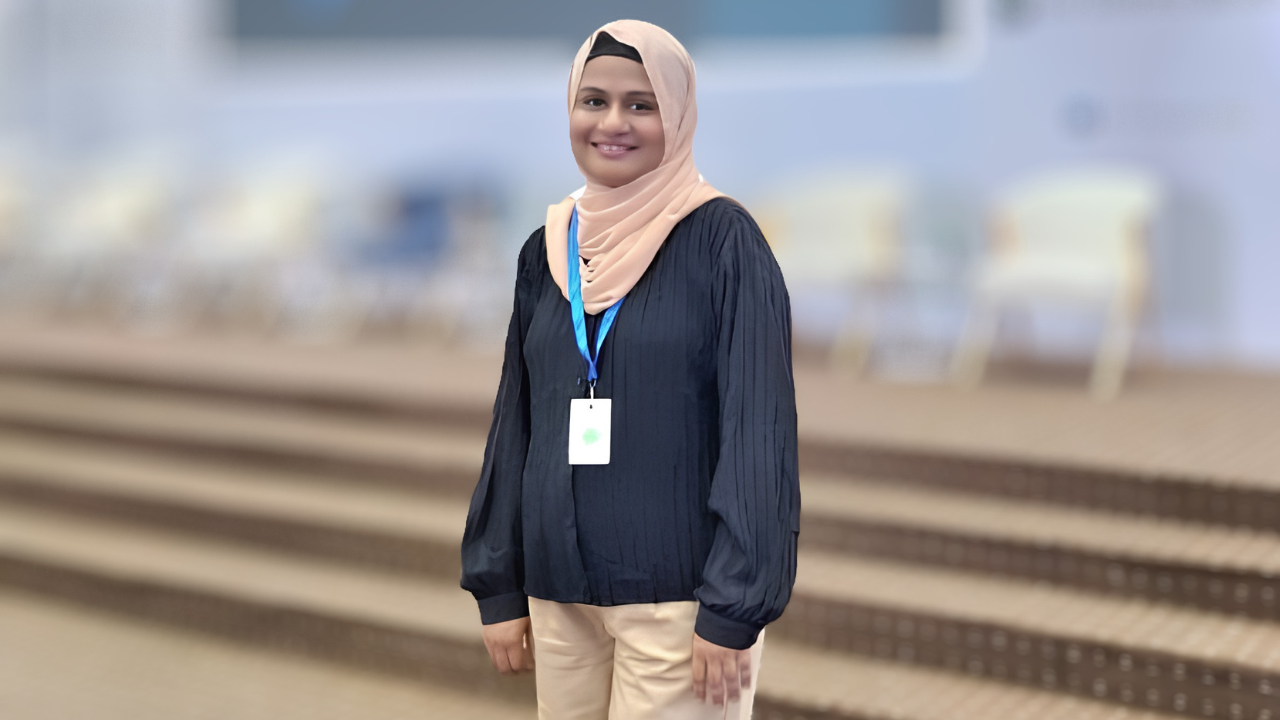
Some of the most important conversations in my career never happened in a boardroom or appeared on a project plan. They happened sitting across from Mushyada Ali, unpacking a difficult situation together: what deserved a response, what needed a different approach, how to build the right relationships and buy-in, and sometimes, what simply wasn’t worth giving my peace to.
When I was building the cybersecurity function at the largest university hospital in Pakistan, Mushyada was one of the people I leaned on through some of the hardest and most formative moments. She, Erum Gonsalves, and I started as colleagues and became dear friends, sounding boards, reality checks, and fierce supporters of one another. I can say with certainty that I would not have had the success I did without their support.
But this story is not about what Mushyada did for me. It is about who she is and everything she continues to become.
I have had the privilege of watching her build, lead, learn, become a mother to two incredible children, return to work, pursue advanced education, and continually stretch herself into new areas of technology, data, healthcare, and AI. Through every chapter, she has remained deeply curious, incredibly smart, thoughtful about people, and never afraid to keep learning.
This feature is personal for me. But more importantly, it is an opportunity to introduce you to someone whose journey, perspective, and strength have inspired me for years.
This is Mushyada’s story.
Career Journey & Building from the Ground Up
You’ve had such a powerful career journey across enterprise technology, process improvement, business intelligence, data science, and healthcare analytics. When you look back, what feels like the thread that connects all these chapters?
I think if there is one thread, it has been love for learning, problem solving and change.
My career was never really planned this way. I didn't start out thinking I would move from enterprise systems to process reengineering, then Business Intelligence, data science, and healthcare research. One thing just kept leading to another. I would learn something, get comfortable with it, and then start wondering what else was out there. I have always had this desire to explore the horizon.
And when I look back, I think every move added something different to the way I work and think. I was also fortunate to have mentors along the way who guided me, sometimes saw potential in me before I saw it myself, and encouraged me to take on opportunities that helped shape where I went next.
I started very much on the technology side. Then moving into business process reengineering gave me a completely different view of the organization. I was learning how different departments worked, understanding their processes and challenges, and seeing things much more from the user side rather than only from the technology delivery side.
Interestingly, that experience eventually brought me back to technology with a different perspective. I had seen the gaps around data and how difficult it was for people to bring information together and use it. That understanding naturally led into Business Intelligence and the opportunity to build something around those needs.
From there, my work evolved further into healthcare data science and research, which opened another new world for me. I started working much more closely with clinicians and researchers and learning to look at data through healthcare and research lens. There was a patient behind the data, a clinical question someone was trying to answer, or years of information that could potentially help us understand something we hadn't been able to see before.
So, I think every move expanded my horizon in a different way, and every challenge I managed to work through gave me a little more confidence to take on the next one.
The roles and technologies have changed quite a lot over the years, but I guess the part of me that enjoys the journey hasn't changed that much. I still get excited about learning something I don't know, understanding things from a new perspective, solving problems, and using what I have learned to build something that can make a difference.
At Tech She Secures, we talk a lot about being bold, authentic, and driven. What has been your “BADdest” career moment so far, the challenge, decision, or season that really shaped you?
I don't know if I can point to one particular “BADdest” moment. When I look back, I think it has been a series of milestone projects and opportunities where I was willing to take on something new, often before I completely knew how I was going to do it.
Every stage of my career had projects that stretched me in a different way. I have implemented enterprise systems, built data warehouses and analytics capabilities, developed solutions across different tools and technologies, taught others, and later moved into healthcare data science and research. With each one, there was something new to learn and a different problem to solve.
And I think those projects shaped me as much as the roles themselves did. When you take on something you haven't done before, you don't just learn the technology. You learn how to figure things out, work with different people, deal with things that don't go as planned, and gradually build the confidence to take on the next challenge.
I felt the same when I started working more closely with clinicians and researchers. I brought years of experience in technology and data, but I was entering a space where there was so much I didn't know. What I realized was that I wasn't starting from zero. I was carrying everything I had learned before into a new space and adding another perspective to it.
So I think what has shaped me is not one bold decision as much as being open to opportunities that stretched me, continuing to invest in my own development, and not letting the fact that I didn't know everything stop me from trying.
You have helped build major data and analytics capabilities inside the largest university hospital in Pakistan. What does it take to build something meaningful from the ground up in a complex healthcare environment?
Having done this more than once, first with Business Intelligence and later supporting my team in building the Health Data Science Centre, I would say the technology is often the easier part. The harder part is bringing the right people together, building trust and getting people to embrace change.
When we were setting up Business Intelligence, analytics was still relatively new for many people around us. A lot of the work was really helping people understand why their data mattered and what they could do with it. Years later, when I moved into health data science, I found myself dealing with some of the same challenges: helping people understand the value of data, earning stakeholder trust, bringing together fragmented data, and securing the support and resources needed to sustain what you are building.
Healthcare data is fragmented. The same data element can mean different things to different people. Data quality can vary, and the clinical context changes everything. So one thing I have learned is not to start with the technology. Start with the problem. Spend time with the people who deal with it every day, understand how they work, what frustrates them, and what they are actually trying to achieve.
I also believe in starting small. Find a meaningful use case where you can demonstrate value. Solve one real problem well, and let people see the result. That is often how you build credibility. Someone becomes your champion, another team becomes interested, and gradually things start growing. It is much easier than trying to convince an entire organization with a presentation about what technology could do.
The people you bring together are equally important. Clinicians, researchers, data people and technology teams need to work together. And everybody has to be willing to learn from the others. And you need leaders who give teams enough room to experiment and occasionally fail, because when you are building something new, not everything is going to work the first time.
And then you need patience. Large institutions don't change overnight. Sometimes the technology is ready much earlier than the people, processes or culture around it.
So if I were building something again tomorrow, I would probably follow the same approach: understand the problem, bring the right people together, start with something meaningful, and let the work gradually build the trust you need to grow. Technology will keep changing, and you can always evolve it along the way. But if you don't get the people, the problem and the trust right, even the best technology will struggle to make a lasting difference.
Data, Healthcare & AI
Your work sits at the intersection of data, healthcare, research, operations, and decision-making. What excites you most about the role data can play in improving healthcare?
What excites me most is how much healthcare data is beginning to open up, especially in Pakistan. I have felt this on almost every project I have worked on. You start looking at years, sometimes decades, of data and think, this was sitting here all this time, we just needed to unlock it. And once it is curated properly, you don't always need something very sophisticated to find value. Sometimes even a simple visualization can reveal patterns that nobody has looked at before.
At the same time, I think we are at a very interesting point in Pakistan. More healthcare organizations are implementing digital systems, some hospitals are moving towards paperless environments, and there are efforts in the public sector as well to capture healthcare data digitally. We are also seeing new technologies, startups and a growing interest in healthcare analytics and AI. Some of the research questions and machine learning ideas that were difficult to explore earlier because of data scarcity are gradually becoming possible.
Of course, having more data doesn't automatically mean we know how to use it. We still need to curate it well, improve data quality and build the skills to work with it. That is why I have also been involved in capacity building around data curation, visualization and data literacy. AI adds another opportunity because so much valuable clinical information is sitting in notes, reports, text and images that we have not really been able to use before. That, for me, is where data and AI become truly meaningful. It is not technology for the sake of technology, but turning information that was previously inaccessible into evidence.
For me, the real excitement is that all of this is starting to come together. We have years of existing data to learn from, more data is now being captured digitally, and technology is giving us new ways to use it. That gives us an opportunity to generate evidence about our own populations, our own disease patterns and our own healthcare realities, which can ultimately help us make better healthcare decisions and improve lives.
In healthcare, data can be complex, sensitive, and deeply impactful. How do you think about turning data into something that is useful, trusted, and actionable for clinicians, researchers, and leaders?
I think trust is built through transparency, but for data to be useful and actionable, it also has to connect to a real question or decision.
Healthcare data is complex. It wasn't necessarily collected for the question you are now trying to answer, and there will always be limitations. So I don't think our role is to present a number and say, “This is the truth.” We need to make the journey behind that number understandable. That means being clear about definitions and methodology, putting strong data-quality checks in place, involving domain experts in validation, and being comfortable acknowledging limitations.
In fact, I really value it when a clinician looks at an analysis and says, “This doesn't reflect what I see in practice.” My response isn't to defend the numbers. It is to go back and understand why. Maybe our definition is wrong, something changed in the way the data was captured, or we have missed an important part of the clinical context. Those conversations often make the analysis much stronger.
Then there is the question of making it actionable. I always want to understand, what decision are you trying to make, or what problem are you trying to understand? We sometimes get carried away with dashboards and indicators and show people everything we have, but more data doesn't necessarily lead to better decisions. It is about bringing forward the information that is relevant and presenting it in a way that people can understand and act on.
I have seen this happen in many of the projects I have worked on. Sometimes when you bring years of data together and present it in a meaningful way, it becomes an eye-opener for the people who have been working in that area for years. They suddenly see a pattern, a gap or a trend that wasn't visible before. And the most satisfying part is when that doesn't end with the analysis. It starts a conversation, leads to a deeper investigation, and eventually results in an action or an improvement. For me, that is when data really becomes valuable.
And because this is healthcare, all of this has to happen responsibly, with a clear purpose of use, appropriate de-identification and responsible access. So for me, good healthcare data work is not just about producing accurate numbers. It is about producing information people can trust, understand and actually use to make something better.
You have continued your own learning in artificial intelligence while leading high-impact work. How has studying AI shaped the way you think about healthcare data, innovation, and problem-solving?
Studying AI has changed my thinking in two directions at the same time. It has made me much more excited about what is possible in healthcare, but also much more thoughtful about where AI genuinely adds value.
One of the biggest changes has been how I look at healthcare data itself. Earlier, much of my work was around structured data, but studying AI broadened my thinking to everything that sits outside those traditional datasets. There is an enormous amount of information in clinical notes, reports, text and images that we have struggled to use effectively. AI gives us new ways of unlocking that information, connecting different forms of data and finding patterns at a scale that was very difficult before. And honestly, I feel we are still at the beginning. When you look at how quickly the underlying technology is evolving, it is quite astonishing to think about what may become possible in healthcare over the next five or ten years.
At the same time, understanding AI more deeply has changed the way I approach problems. I probably ask more questions now before deciding that AI is the answer. Do we have the right data? Is it representative of the population we are working with? How will we validate the solution? And sometimes, do we even need AI for this problem? There are many situations where a simpler analytical approach may actually be the better solution.
Learning and professional development have always been part of my career, and I was fortunate to attend professional trainings regularly. But going back to university after almost 16 years was different. It required a different level of persistence and commitment. I first went back for a formal diploma in AI and then a Master's in AI, not because I needed another qualification, but because I had developed a genuine interest in AI and wanted to understand it more deeply. Returning to formal education while managing work and family was challenging, but I really enjoyed it. It gave me a different kind of energy and confidence, and reminded me how much I enjoy learning. More importantly, studying AI in depth helped me look beyond the excitement around the technology and think more carefully about where it can actually add value.
So for me, AI is a tool, not the objective. The objective is still solving a meaningful problem and creating value. But it is an incredibly powerful tool, and I think we are only beginning to understand what it will make possible. That is also why I feel you have to keep learning, because five years from now, we may be having a very different conversation about what AI can do.
Leadership, Mentorship & Navigating Complexity
One thing I have always admired about you is how calmly and thoughtfully you navigate difficult professional situations. What has experience taught you about handling workplace challenges, politics, or difficult personalities without losing your values or relationships?
I think experience has taught me to be more thoughtful about where I give my energy and where I keep my focus. Difficult situations can be draining, but over time I have learned to bring my focus back to the things I can control, the work I am doing, what I can learn, and what I want to do next.
One difficult situation, one difficult person, or one difficult season does not define your entire journey, and I don't think we should carry it with us for too long. Learn from it, take what you can from the experience, and keep moving forward.
What matters to me is keeping my intent right: doing what I believe is right for work, for the organization, for the people I work with, and for the larger goal. That doesn't mean avoiding difficult conversations. I am someone who does speak up, particularly when it comes to values, fairness, and the quality of the work. But I have learned that you can stand for something without allowing the situation to consume all your energy. I try to find a way to refocus. For me, that often means learning something, starting something new, or exploring another direction. Talking to mentors and people I trust has also helped me a lot over the years, especially when I am too close to a situation to see it clearly.
Having said that, I don't always manage difficult situations perfectly. They still affect me, and I think we are all constantly learning. I find myself learning from younger generations too, from Gen Z at work and Gen Alpha in my own life. Sometimes I see them laugh off situations that our generation would analyze for days, and I think, maybe they have got something right there. I would definitely like to learn a little of that.
I think the important thing is not to let a few difficult situations take up more space in your life than they deserve. Learn what you can from them, stay true to your values, and then keep moving forward.
You were one of my earliest mentors when I was building a cybersecurity program at the largest university hospital in Pakistan, and your advice helped me through some very difficult moments. What does mentorship mean to you, and how do you approach supporting someone during a challenging season?
Mentorship has played a very important role in my own career. I have been fortunate to have people along the way who gave me advice, broadened my thinking, challenged me when I needed it, and many times gave me the confidence to keep going. A lot of my own growth came from having those people around me.
So when I think about mentorship, I think about helping another person grow. It is not about giving them all the answers or telling them exactly what to do. It is about helping them see what they are capable of, encouraging them to stretch themselves, and giving them the confidence to move forward, especially when they begin to doubt themselves.
And actually, our relationship is a very good example of that. You may remember me as one of your early mentors, but there were many times when that relationship went the other way. You gave me some very good advice when I needed it, but more than that, you gave me motivation and encouragement. Sometimes that is exactly what a person needs.
I work closely with people to understand their strengths, guide them on the skills they can develop, and help them see opportunities for growth. I encourage them to look beyond their current role and pursue opportunities wherever they may be. During challenging times, I help them break things down, remind them of their strengths, and give them the confidence to keep moving forward.
For me, the best mentorship relationships are built on trust. You should be able to have honest conversations, including difficult ones, without feeling judged. You should be able to celebrate the good moments together too.
One of the most rewarding things about mentorship is seeing someone grow, helping them find confidence when they need it, and realizing that, along the way, you grow together.
You work with technical teams, healthcare professionals, researchers, operational leaders, and executives. How do you build trust and collaboration across groups that may not always speak the same language?
I have actually been fortunate to sit on different sides of the table during my career, and that has helped me a lot. The same problem looks very different depending on where you are sitting. A technical person may immediately see a system or data issue. A clinician may be thinking about the patient or the workflow. A researcher sees a research question. Leadership may be thinking about resources, risk or the wider organizational impact.
And everybody can be right. So I try to listen first.
I try to understand what the person in front of me actually needs before I start translating that into a solution. Sometimes a simple example or visualization helps everyone see the same thing. Other times you just need to bring the conversation back to what everyone is ultimately trying to achieve.
Probably one of the biggest lessons for me has been to respect expertise that I don't have.
I’m not a clinician, and I don’t need to pretend that I understand medicine better than a clinician does. What I’ve learned over the years is how to understand their perspective and ask the right questions. In the same way, clinicians don’t need to understand data engineering at the level my team does. Our job is to make the technical side transparent, explain our assumptions and how we arrived at a conclusion in a way they can understand and challenge. That’s really where good collaboration happens. We bring different expertise to the table, and we need each other’s expertise to get to the right answer.
That sounds obvious, but it changes the way you work with people. Instead of building something for them, you start building it with them. So sometimes collaboration is really just about getting people moving in the same direction.
Motherhood, Growth & the Human Side of Leadership
I have seen you grow through so many seasons, including becoming a mother, returning to work after having children, continuing to lead, and pursuing advanced education while raising two amazing children. How has motherhood shaped your leadership, resilience, and the way you define success?
Motherhood changed a lot for me, including what success means.
And first, it wasn’t easy. I come from a background where very few women around me worked full-time. My parents also had health challenges, and I was primarily responsible for much of their care, so I didn’t really have the “village” that people often talk about.
My children were the first in our entire extended family to go to daycare. At the time, that felt like a very big thing. There was guilt, there were questions, and there were definitely days when I wondered whether I was doing the right thing.
But now I look at my children and see how independent and resilient they are. And they are proud of me. That means a lot.
Something I have realized over the years is that when you choose a path that wasn’t common for the women before you, you are also changing what becomes normal for the children who come after you. My children grew up seeing their mother work. They saw me take on new roles, struggle with things, and continue learning. And they supported me throughout. Things that were new and difficult for me are simply normal to them. And I want that.
I also want to keep learning because I want to remain connected with them. Children grow into a world very different from the one we grew up in. I don’t want to stop growing while they continue moving forward. I want to understand their world and stay connected with them through different seasons of life.
So success for me isn’t only about what I achieve professionally. It is also about the kind of human beings my children become, the relationship I have with them, and whether they can look at my life and know that it is normal to keep trying, to keep learning, and not to give up when things become difficult.
And for women who don’t have that village, I would say: find other women who have walked this road. They will tell you the truth. They will tell you it is tough. But they will also remind you that you can do it, and that one day you may look back and be proud of how far you have come.
Sometimes, when you are struggling through the day-to-day, you don’t realize the change you are creating. But a mother can be a change-maker for her family. By choosing a path that may not have existed for her, she can make that path feel completely normal for the generation that follows.
You have balanced leadership, advanced studies, family, and high-impact work, often all at the same time. What has this season taught you about boundaries, energy, self-care, and giving yourself grace? And on a lighter note, what is one self-care ritual or reset that helps you stay grounded?
I think this season has taught me that balance is probably the wrong word. Life is rarely balanced. There have been times when work needed more of me, times when my family needed more of me, and times when I had to recognize that I needed to make space for myself. What matters is knowing what needs you most in that particular season and being intentional about where you put your energy.
I have also learned that energy is finite. You cannot say yes to everything and still give your best to the things that matter most. I am naturally someone who takes on a lot, and I am also a perfectionist, so boundaries have not always come easily to me. I am getting better at recognizing when something does not need more of my time, when good really is good enough, and when saying no is necessary to protect the things I have already said yes to.
Giving myself grace has probably been the harder lesson. When you are used to holding yourself to a very high standard, it is easy to focus on what you could have done better rather than everything you managed to carry. I have had to learn that I can be committed, ambitious and responsible without expecting perfection from myself in every part of my life at the same time. We often extend far more compassion to other people than we extend to ourselves.
And when I need to reset, I come back to my spiritual connection and to God. Prayer gives me perspective and reminds me that not everything has to be carried by me. That has always been very grounding for me. And on a lighter note, spending time with my kids is probably my other reset. Going out together, watching movies, laughing and just forgetting about everything else for a while. They are very funny, and honestly, they are my favorite people to spend time with.
I don't think I have mastered boundaries or balance, but I understand myself a bit better now. I know when I need to step back, I am more thoughtful about where I spend my energy, and I am learning to give myself the same grace that I readily give to others.
Future of Tech, Leadership & What Comes Next
As AI, data, automation, and cybersecurity continue to reshape healthcare and the workplace, what do you think people leaders and technology leaders need to focus on next? And personally, where do you see yourself heading in this next chapter of your career and life?
Everywhere you go today, somebody is talking about AI changing jobs and changing the workplace. And I always think, what’s new? Change is permanent.
I have seen technologies, platforms, skills and entire ways of working change throughout my career. What is different now is probably the speed. Technology is moving faster than people and organizations are sometimes able to adapt.
For Pakistan, I think this is particularly important because we already have skills gaps, and in healthcare we still have some very basic challenges around data quality, governance and readiness. AI is not going to make those problems disappear. If anything, it makes getting those foundations right even more important.
So I think leaders need to invest in people just as seriously as they invest in technology. We need continuous upskilling and reskilling. And I think curiosity and adaptability are going to matter enormously. AI can give us answers faster than ever, but we still need people who understand the context, challenge what they are seeing and know what questions to ask. Especially in healthcare, we cannot lose that human judgment.
Personally, I want to go deeper into healthcare AI, data and analytics. I feel there is so much we can potentially do with healthcare data in our part of the world, and there is still so much for me to explore. I also feel that many different parts of my career, healthcare, technology, data analytics and leadership, are somehow coming together in this space.
I do have a few aspirations for the next chapter. Professionally, I would like to grow towards a Chief Data Officer role, where I can bring together data, technology, people and strategy at a broader level. And academically, I would like to pursue a PhD, probably around emerging technologies. I genuinely enjoy learning, so I don't think that part of my journey is going to stop.
If I look back, I never really had my entire career planned. Some of the best things happened because I followed my curiosity and was willing to step into something new. So while I have aspirations, I also want to remain open to where the journey takes me. There is so much still to learn and do, and I hope we can play a part in shaping what comes next.
Closing Reflections
What I admire most about Mushyada is that no matter how much she has accomplished, she never stops learning, evolving, and looking toward what comes next.
Her journey is a reminder that meaningful leadership is not just about expertise or titles. It is about curiosity, resilience, relationships, knowing where to give your energy, and having the courage to keep growing through every season of life.
Mushyada, thank you for your friendship, your wisdom, your support, and for being such an important part of my own journey. I have been fortunate to witness so many chapters of yours, and I know there are many more still ahead.
I cannot wait to see what you build next, and I feel incredibly lucky to call you one of my closest friends.
Maliha
Disclaimer: The content on this blog and website reflects a combination of my personal experiences, perspectives, and insights, as well as interviews and contributions from other individuals. It does not represent the opinions, policies, or strategies of any organization I am currently affiliated with or have been affiliated with in the past. This platform serves as a personal space for sharing ideas, lessons learned, and meaningful reflections.
