Built Through Resilience: Melissa Muñiz on Career, Community, and the Courage to Bet on Herself
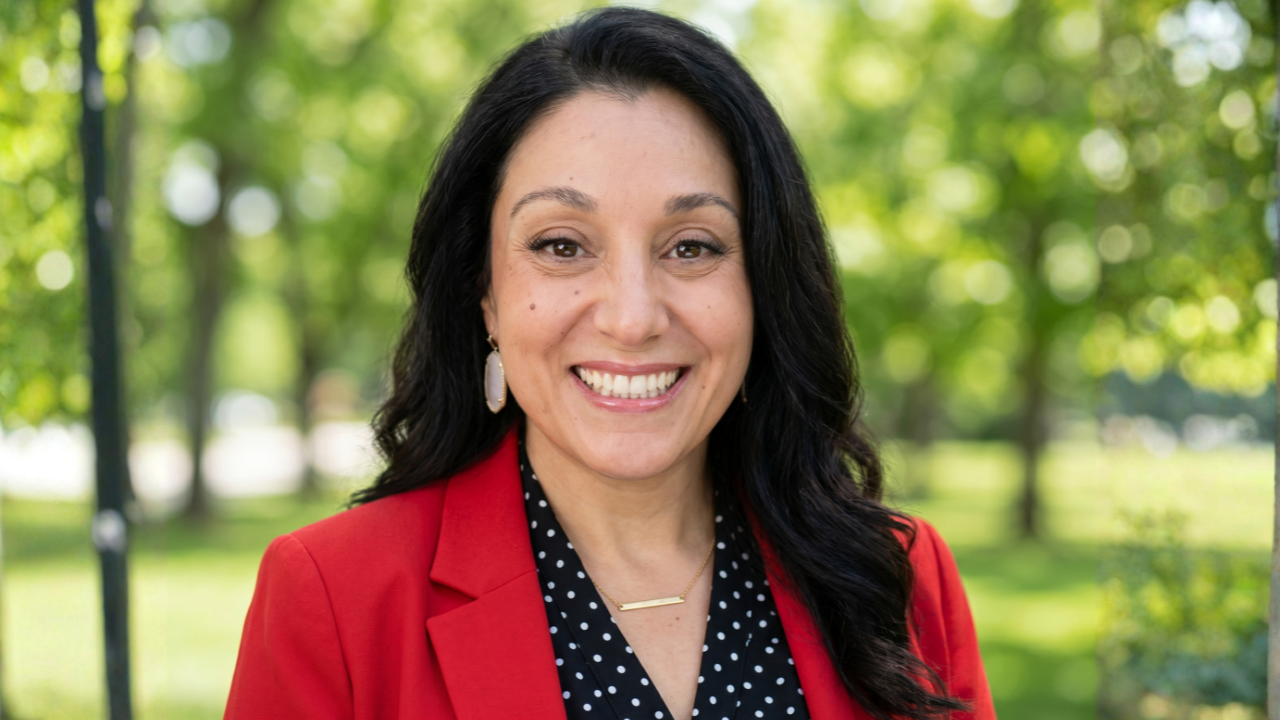
I was introduced to Melissa Muñiz through my mentor and dear friend Sarah Richardson, and what started as a simple connection quickly became one of those friendships that feels like it was always meant to exist. From our very first conversation, I was struck by Melissa's humor, her authenticity, and the warmth she brings to every room she enters. We also realized almost immediately how many people we share in common, which made the whole thing feel a little like the universe was in on it.
Melissa's story is one of resilience lived from the inside out. She became a mother at 16, built a career in technology and disaster recovery, led multi-million dollar enterprise programs, and eventually launched her own company, Zion Resiliency. Not from a business plan, but from relationships.
What I love most is the reminder her story carries: resilience isn't only something we architect into our organizations. It's something we live through our choices, our relationships, and the way we keep moving forward when life doesn't follow the plan. Sometimes there is no roadmap. Sometimes you build the path by walking through the doors that open and trusting yourself a little more with each step.
Origins & Career Journey
Your story is incredibly inspiring and deeply human. From becoming a mother at a young age to building a successful career in technology, resilience, and disaster recovery leadership, can you walk us through your journey and the experiences that shaped who you are today?
My story doesn't start where most people expect it to. I became a mother at 16, and from that moment forward, everything I did was shaped by two things: proving that I was more than what people assumed, and making sure my daughter Annie saw what was possible.
I went to school to become a Microsoft Certified Systems Engineer. When I finished, I did what our parents taught us. I found a good company and walked in prepared. I'd researched HCA Healthcare, found a part-time opening loading DLT tapes into Data General machines, and got hired on the spot. From there I worked into a full-time night shift, 9 PM to 9 AM, which I loved because it let me volunteer and participate in my daughter’s class. When my manager stepped down, the director over our data centers encouraged me to apply for his role. I was 24 years old. I didn't even know I couldn't rent a car yet. And suddenly I was managing one of HCA's larger data centers — a multi-million dollar operation supporting almost 100 hospitals.
Nobody handed me a map. I just kept walking through doors that opened, stayed curious and did what I could to be prepared or “fake it ‘till you make it”.
You built your career in technology and infrastructure spaces during a time when there were far fewer women in those environments. What was that experience like, and how did you learn to trust yourself and your abilities along the way?
I’ve learned to trust in my abilities but honestly I still have to prove my background and expertise.
When I moved into disaster recovery at HCA, I came in with a technical background that became an asset in my interactions with the IT teams, but only after I proved it. But even still with every new room, every new team, I had to earn the credibility that my male counterparts often walked in with automatically. In my next role after HCA, the IT team made a point of telling me upfront during the interview: this is disaster recovery, not business continuity. I looked them in the eye and said, I know. And then I showed them.
What's striking is that this hasn't changed as much as it should have. I'm an experienced consultant now, and when I'm meeting with a new client's infrastructure team, I still feel the need to signal my technical background in the introductory email because I know what happens when a woman walks into that room without context. People make assumptions. I've learned to get ahead of them.
What kept me grounded through all of it was refusing to shrink. I didn't always have the confidence I have now, but I had something just as powerful - the drive to succeed and I had something to prove, that can carry you a long way.
Leadership & Influence
You've grown from operational roles into leadership positions managing large-scale environments, teams, and enterprise resilience programs. Looking back, what leadership lessons have stayed with you the most throughout that evolution?
The most important leadership lesson I've learned didn't come from a book or a training program. It came from the people who saw something in me before I saw it in myself.
At HCA, John Hayes was one of the most influential mentors I've ever had. He saw leadership potential in a 24-year-old managing a major data center and treated me accordingly, brought me into rooms, pushed me to grow, and helped me understand I was capable of more than I gave myself credit for. For a long time, I chalked it all up to luck. It took years, and honestly it took my husband Matthew, to finally hear what people had been trying to tell me: you may have been lucky to have had the opportunities, but you're the one who made the most of them.
Along the way I also found my people in this community. I connected with strong, brilliant men & women who became close friends and mentors, not just to me but to my daughter as well. The kind of people who challenge you, champion you, and remind you who you are when the work gets hard.
Throughout your career, mentorship and community seem to have played an important role. How have those relationships influenced your journey, and how do you approach supporting and encouraging others today?
Mentorship has been the throughline of my entire career and I've been on both sides of it in ways that shaped me deeply.
John Hayes at HCA is someone I will always credit. He saw leadership in me before I saw it in myself, brought me into rooms that mattered, and modeled what it looked like to lead with both competence and character.
Paying it forward is something I think about constantly. People like Ray Holloman, who came up through at HCA, and spent time with me in DR. He has become one of my inspirations and reminds me why investing in people matters so much. But it's bigger than any one relationship. I stay deeply involved in my professional community, mentoring people who are new to our industry, staying connected with colleagues I've met through conferences like DRJ, and trying to be the kind of presence for others that someone once was for me.
Risk, Resilience & Real-World Impact
People often think of disaster recovery and resilience as purely technical disciplines, but there's such a strong human and operational element behind the work. What do you think people misunderstand most about resilience leadership?
Resilience has to be woven into the fabric of how an organization operates not bolted on after the fact. That's the part people get wrong most often.
One of the things I'm most proud of from my time at HCA was being able to integrate disaster recovery planning into our early project management efforts. We built it into the formal process for passing an application to operations. That meant resilience wasn't an afterthought; it was a requirement from the start. That kind of intentional integration is what actually works.
The other piece that gets overlooked is inclusion. Everyone needs to be part of the planning process not just IT, not just leadership, but the people who actually run the operations day to day. They know where the gaps are. They know what breaks under pressure. If your resilience plan was built without their input, it's probably missing something important.
I've walked into organizations with beautifully documented plans and RTO targets down to the minute but no real confidence that any of it would hold under pressure. Because the people responsible for executing them had never actually tested them together. That's not resilience. That's the appearance of resilience.
You've witnessed an incredible evolution in disaster recovery and business continuity, from backup tapes to replication, automation, and modern resilience platforms. What changes in the industry stand out to you the most, and where do you think organizations still need to mature?
I go back far enough in this industry to remember shipping tapes to an offsite location as our recovery strategy. I have watched this evolve from tape recovery to replication to the modern cloud-based platforms we rely on today and that evolution has been remarkable.
But here's what I still see, even with all of that technology: during testing, data gets missed. Processes haven't kept pace with the platforms. Organizations have invested heavily in modern tools without investing equally in the governance, documentation, and discipline that make those tools actually reliable. They have the technology. They don't always have the process to back it up.
The other gap I see consistently is alignment on criticality. When teams can't connect a system outage to a real operational or financial impact, resilience programs get underfunded and undertested because groups make assumptions about the impact. That is until something goes wrong!
With the rise of AI, automation, and increasingly complex operational dependencies, what opportunities or risks do you think resilience and continuity leaders should be preparing for now?
AI has real potential to transform how we identify risk, impact and respond to disruptions in real time. For our discipline that's a meaningful shift — and I'm genuinely excited about it.
But as organizations adopt AI and automation, they're introducing new dependencies they don't fully understand yet. And when you don't fully understand a dependency, you can't fully plan for its failure. I've spent my career helping organizations think through what happens when critical systems go down — and many haven't yet asked that question seriously about their AI-driven processes.
My advice: don't let the sophistication of the technology outrun your understanding of it. Know your dependencies. Test your assumptions. And make sure the humans in your organization are as resilient as the systems you're building around them.
The Human Side Behind the Work
You've worked with teams across many different environments and organizations over the years. What do you believe makes a resilient team culture, especially in high-pressure or high-stakes situations?
Resilient teams are built long before the crisis hits. That's the part people miss.
When something goes wrong, and in my experience, something always eventually does, your preparation, your relationships, and your culture are what carry you through. Can adrenaline get you by? Sure. I’ve seen it happen. But that’s luck, not a strategy. The teams that perform consistently under pressure are the ones who built something solid before the crisis arrived.
And that starts with psychological safety. When I’m working with planning teams, one of the most valuable things I do is simply ask: what keeps you up at night? You would be amazed what surfaces when people feel safe enough to answer honestly. Those conversations are where the real gaps live. If your team can’t have that kind of candor in a planning session, they won’t have it during an actual crisis either. Testing together builds that trust. It creates the muscle memory and the shared language that means when something goes wrong for real, people aren’t freezing up or waiting to be told what to do, they already know.
I'll tell you the moment that crystallized this for me. Earlier in my career, our organization declared a disaster and moved operations and I wasn't involved at all. I got the call after the fact. The teams knew exactly what to do because we had tested so consistently and so thoroughly that they didn't need me to execute. Some people might have felt sidelined by that. I thought it was the greatest measure of success I had ever experienced. That's what you're building toward every time you run an exercise that feels inconvenient or unnecessary.
Tech She Secures always loves highlighting the human side behind the professional journey. What's one self-care habit, ritual, or activity that helps you recharge and stay grounded outside of work?
I am a firm believer that you cannot pour from an empty cup, and I've had to learn that lesson more than once.
Outside of work, I move my body — intentionally and often. I enjoy group workouts, I hike, I've trekked the Inca Trail and hiked the Grand Canyon. Those were demanding, humbling, full-commitment experiences that reminded me what I'm capable of when I decide to do something hard. That reminder travels back into work and career whether I realize it or not.
I also cook and entertain. I love creating an experience for the people I love through food and good laughs. And then there's family. I became a grandmother not too long ago, and nothing recalibrates your priorities faster than holding a new life and realizing the world is still turning beautifully outside of your inbox. My daughter Annie has always been my why and watching her build her own life is something I don't take for granted for a single day.
Entrepreneurship & Reinvention
After spending many years in enterprise leadership roles, you made the decision to take the leap and launch Zion Resiliency. What gave you the courage to bet on yourself in that way, and what has the journey into entrepreneurship taught you so far?
Honestly? I didn't choose entrepreneurship. It chose me and then I chose to embrace it fully.
I was furloughed and then laid off during Covid. What I had going for me was something I'd been quietly building for years without fully realizing its value, a community. A deep, genuine network of people who knew my work, trusted my expertise, and wanted to see me succeed. I reached out. People responded. A contract came together. And then another. And then another. Zion Resiliency wasn't born from a business plan or a bold leap of faith. It was born from relationships.
What this journey has taught me is to trust my knowledge and my experience. The steadiness I thought I needed from a traditional role - the title, the paycheck, the org chart - I had actually been carrying inside me the whole time. And with that came a freedom I didn’t expect. The freedom to travel, to work from anywhere, to say yes to summits and conferences and team events where I continue to build the network and community that have always been at the heart of how I work. Covid forced me to find that out. And I’m grateful it did.
Sometimes the disruption you didn't plan for turns out to be the one that changes everything.
BADdest Moment
Tell us about the "BADdest" challenge you've taken on in your career — the boldest, most authentic, and driven moment you're most proud of — and how it shaped you.
The boldest, most authentic, most driven moment of my career didn't happen in a boardroom or a data center. It happened in an elementary school hallway.
I was 16 when I had my daughter Annie and I was doing everything I could to be present in her life while also building a career that would give her a future worth being proud of. When Annie was in first grade, her school sent home a letter begging parents to get involved, to join the PTA, to show up. So I did. I went to sign up.
They told me there were no positions available. They no longer needed help.
What they saw was a young mother and made their assumptions accordingly. That is just one story, there were story after story of walking into rooms and not being taken seriously or respected as her mother. I made a decision, maybe not consciously in that moment, but in my bones. I was going to build a life that would prove I was worth more than one single mistake. And while I spent my time doing that, I also worked to create a space where others could be bold and authentic with me.
That young mother they turned away? She became the someone who built a beautiful life with diverse characters and genuine love.
Future & Advice
For the Tech She Secures community and others navigating career transitions, reinvention, or unexpected life challenges, what advice would you share with them today, and what's next for you as you continue building your impact in this space?
Your network is not a backup plan. It's infrastructure. Build it before you need it, invest in it genuinely, and trust it when things get hard.
For anyone who feels like they're starting over, whether by choice or by circumstance, the skills, the experience, and the relationships you've accumulated are not lost just because the role is. You are more portable than you think.
And for the women especially, the ones who have ever walked into a room and felt like they had to earn the right to be there before they even opened their mouths - keep going. Find your community. Find the people who see you clearly and hold that mirror up when you can't see yourself. And then turn around and do the same for someone else.
As for what's next — more meaningful client work, more community building, more conversations that push this industry forward. More trails. More time with family. More of a life that looks as good on the inside as it does on the outside.
I've been in this industry for over 20 years, and staying curious and always being open to learning something new is what keeps it exciting.
Closing Reflections
Melissa’s story is such a powerful reminder that resilience is not only about systems, recovery plans, or crisis exercises. It is about people.
It is about showing up when life does not go as planned. It is about refusing to shrink when others make assumptions. It is about finding the people who see something in you before you fully see it in yourself, and then becoming that person for someone else.
One of my favorite lines from this conversation is this: “Your network is not a backup plan. It’s infrastructure.”
None of us build meaningful careers alone. We grow through community, mentorship, courage, and the people who remind us of who we are when we need it most.
Melissa, thank you for sitting with me, for being so open and real, and for sharing your story with such generosity and heart. That kind of authenticity is exactly what this community is built on.
Your journey is a reminder to trust the doors that open, bet on yourself when the path shifts, and keep building a life that feels true to who you are.
Maliha
Disclaimer: The content on this blog and website reflects a combination of my personal experiences, perspectives, and insights, as well as interviews and contributions from other individuals. It does not represent the opinions, policies, or strategies of any organization I am currently affiliated with or have been affiliated with in the past. This platform serves as a personal space for sharing ideas, lessons learned, and meaningful reflections.
