Curiosity, Transformation, and Staying Human: A Conversation with Dr. Laura Prietula
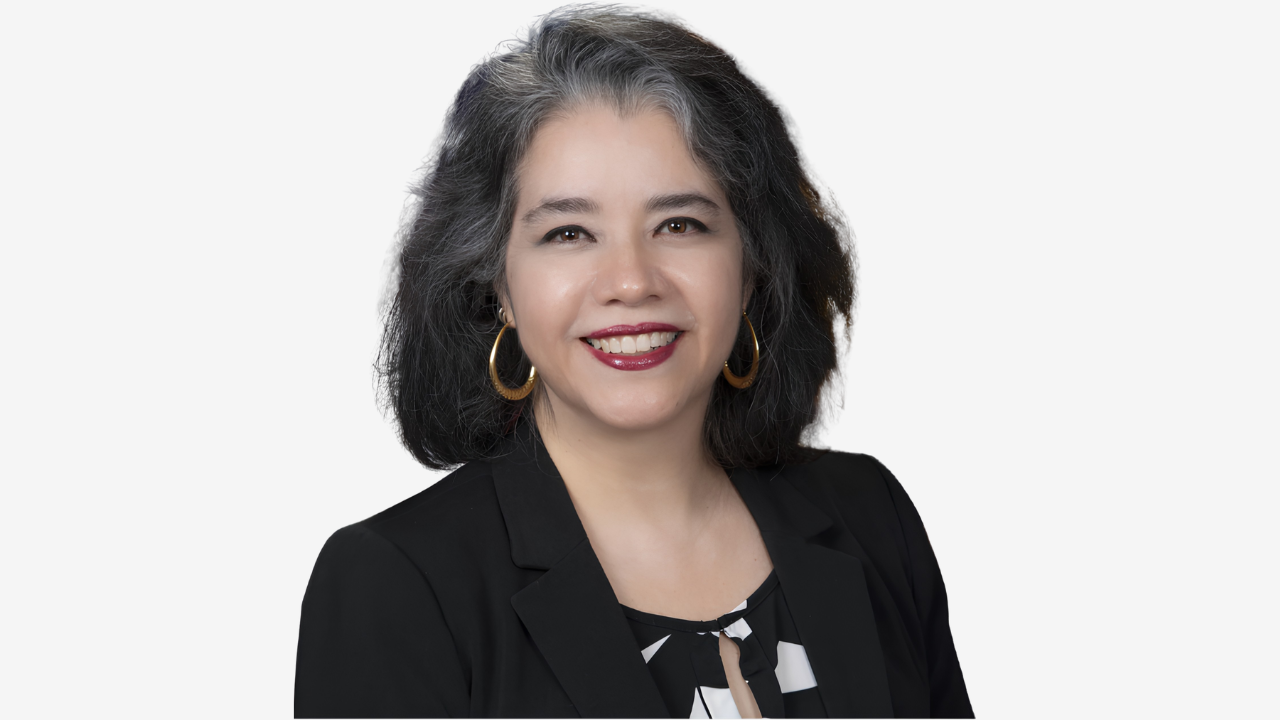
Some conversations remind you why you love what you do.
My conversation with Dr. Laura Prietula was one of those.
I first met Dr. Prietula through Bluebird Leaders and had the opportunity to attend her session at the SOAR conference. Since then, I’ve also seen the way she brings people together, whether through her work or by creating space for the Bluebird community here in Atlanta to stay connected.
Going into this conversation, I already knew the impact she has on people.
What stood out to me even more was how she thinks and how she communicates.
She has a way of breaking down complex ideas into stories and frameworks that feel intuitive and real.
Throughout our conversation, we explored what it takes to lead through transformation, how to navigate uncertainty, and why staying connected to people is at the center of it all.
From “lions, tigers, bears” to how she explains transformation through simple, powerful analogies, Dr. Prietula brings a perspective that is both practical and deeply human.
Origins & Career Journey
You’ve built a career that spans consulting, federal leadership, academia, and entrepreneurship. When you look back, what were some of the defining moments that shaped the path you’re on today?
I’ve always been super curious. I like figuring out things that are complicated, not just for me, but for other people as well.
Even when I was little, I would take things apart just to understand how they worked. Things like VCRs and tape recorders. And then, of course, you have to figure out how to put them back together. But that’s part of the fun.
That curiosity wasn’t just about physical things. It extended to relationships, systems, and anything complex. I’ve always been drawn to those kinds of challenges.
I love jigsaw puzzles. I remember one where both sides had the same image, but one side was slightly twisted. You had to use a glass table to solve it from underneath. It was complicated, but incredibly fun.
That’s how I approach things. I explore things that feel hard because I want to understand them and overcome them. I like to feel like I cannot be defeated.
One framework I use a lot, especially in coaching, is what I call the lions, the tigers, the bears.
Imagine you’re at a campsite and you know that from different directions, challenges are coming. You don’t know exactly when, but you know they will show up.
So, what are three things you would do to prepare for each one?
I combine that with what I call the gift of threes. For every scenario, you think through three actions in advance. That way, when something happens, you’re not reacting in fear. You’re responding with preparation.
When my kids were little, I would always tell them, don’t be afraid. Be aware, and be prepared.
That mindset has stayed with me.
It also goes back to my grandmother. She used to teach through riddles. Sometimes we had to go look things up, understand context, and really think through what she meant. It made us resourceful.
I think all of that shaped me into someone who is very analytical, very curious, and always looking at how to turn something that might be a barrier into something that works with me instead of against me.
You’ve led large-scale transformation efforts across healthcare and government systems. What initially drew you to this kind of work, and what continues to keep you inspired today?
I love complicated things. That’s really at the core of it.
Interestingly, I didn’t start in healthcare, even though both of my parents were in healthcare. My dad was a surgeon, and my mom worked in nuclear medicine. I saw how demanding it was, and I remember thinking, I don’t want that. I want to be free, I want to travel.
So, I started in supply chain.
While I was still in college, some friends and I, along with a few professors, started a small consulting effort. We worked on a strategic and economic analysis for a company in Mexico that wanted to build something similar to 7-Eleven. We looked at where stores should be placed, where distribution centers should go, and how everything would connect.
Today, that company is one of the largest chains in Mexico.
That experience showed me I could apply what I knew in a real-world way. It gave me confidence that I had the ability to solve complex problems.
From there, I moved into manufacturing, working with glass, steel, cement, and automotive. And that’s where my focus started to shift.
It became less about the systems themselves and more about people and change.
Because what’s more complex than human nature?
I started working more on organizational design, understanding how systems support people, or how organizations need to evolve to make systems work. That intersection is what really drew me in.
Then came the Y2K era, which opened up a lot of opportunities in financial systems. And from there, I transitioned into healthcare.
And I stayed.
Because healthcare is different. The impact is real. It’s not just about business outcomes, it’s about people’s lives.
You can see it. You can feel it. You can even touch its impact.
And that’s what continues to inspire me, being able to connect what we do to real human outcomes, and knowing that the work actually makes a difference in people’s lives.
Leading Through Transformation
You’ve worked at the intersection of technology, strategy, and organizational change. What have you learned about what it really takes to make transformation stick?
For me, the most important thing is making change part of the threading of the organization.
You see leaders come in, change everything, and then when they leave, everything goes back to the way it was before. That’s not transformation. That’s temporary change.
Real transformation is systematic. It’s not just about implementing a system. It’s about changing how the organization itself operates.
You have to look at the processes people follow every day and make change part of their natural way of working. If people don’t understand the purpose behind a change, they will go back to old habits. But if they understand the impact, they’ll start improving things on their own.
One thing I try to avoid is relying too much on “why” questions. “Why” can feel very judgmental. It puts people on the defensive.
Instead, I focus on reframing.
Ask what outcome did you achieve. Ask when it impacted you the most. Ask where you saw it happening.
Those kinds of questions shift the conversation from blame to understanding. They help people think more systemically instead of reacting to a single moment.
Another key piece is creating space for failure.
Run pilots. Test things. Let people try, and let them fail.
But you also need to build an infrastructure for failure. People need to know that if something doesn’t work, they’re not alone. There’s support. There’s a way to recover, learn, and move forward.
Without that, failure becomes fear. And fear kills transformation.
Visibility is also critical. Leaders need to be visibly committed. It can’t feel like an experiment that may or may not matter. People need to understand why it matters and what success looks like.
And finally, celebration.
You have to celebrate in ways that are meaningful to people. Not everyone is motivated by the same things.
Some people value recognition. Others value connection, time, or simply feeling seen.
If you don’t understand your people, you won’t know how to celebrate them in a way that actually matters.
And that connection is what makes transformation stick.
You’ve led modernization efforts in healthcare at a national scale. What has that experience taught you about balancing innovation with real-world impact on people and communities?
One of the biggest lessons is that communities are the ones that ultimately determine whether something is useful or not.
When you find something that is truly useful, it becomes part of the threading of your day-to-day. And that is where technologies like AI start to make sense.
You have to bring the technology to where people are. Not the other way around.
There was an example in Mexico where there was an effort to bring toilet seats into a very rural Indigenous community. And you think about it, there is no plumbing, no electricity, no running water. People are carrying water themselves. So where is that even going to connect? Where is it going to flush?
That kind of change was never going to work.
You have to know the people, know the environment, and understand what actually works there. That is what makes change stick.
AI is just another example of this. It is not new. We have had AI, machine learning, natural language processing for many years.
What is different now is how we are using it.
It is becoming part of the threading of everyday work. How do you improve your calendar? How do you make your day more efficient? Those are things people immediately connect to.
And that is where the value is.
Because transformation is not just about introducing something new. It is about changing behaviors. It is about becoming something different.
I always explain transformation with the example of a caterpillar becoming a butterfly.
Once it becomes a butterfly, it will never go back to being a caterpillar. Even if you take the wings away, it is still not the same.
That is transformation. You have fundamentally changed behavior, structure, and how something operates.
And you can only achieve that when it becomes part of the life cycle of the organization. Part of its connective tissue.
Community, Mentorship & Bringing People Together
You’re deeply involved in mentoring, teaching, and supporting women in tech and STEM. What has that part of your journey meant to you personally?
For me, this is actually the way I give back to myself.
When I started teaching, it wasn’t something I had planned. A friend invited me to be a guest speaker in one of her classes. I did it once, then again, and again. Eventually, the institution said, why don’t you formalize this and create a course together? And that’s how I started teaching in executive programs.
It’s about giving back to the community that supported me for so long. And every time I do that, it brings me back to my mom and her teachings.
She always said no woman should be dependent on anybody. Not on a man, not on anyone. And so the question becomes, how do you help make others stronger?
That’s what this means to me.
It also nurtures me. Because through mentoring and teaching, I get to understand where people are coming from. I learn from them. And then I can take those lessons and apply them the next time I encounter someone in a similar situation.
Everything is connected.
And when it comes to STEM, especially for women, there’s still a stigma.
I remember being one of very few women in my program, and people questioning why I was there. Even saying things like, why are you in this field, you should be doing something else.
But I liked the work.
And that’s why this matters to me. Because women can do this. And often, we bring something different to the table.
I don’t want to dismiss our male allies. The combination matters. But women bring a different way of thinking, a different way of connecting, and that matters.
And I’ve always loved characters like Catwoman. She could easily be seen one way, but she’s actually incredibly intelligent, strategic, and fully in control of her own story.
That’s how I see women.
When we allow ourselves to fully step into that power, it’s incredible.
It’s powerful. It’s transformative. And honestly, it’s a little bit magical.
You’ve shared your knowledge across so many platforms, whether in leadership roles, teaching, or coaching. What motivates you to continue showing up and giving back in that way?
People.
The most amazing thing in this world is people.
The more we spend time with people, the more we give to people, the more we connect. And the more we relate to each other.
And in that, you start to feel part of something.
You build a tribe, or multiple tribes, where you can show up and belong. You connect, you interact, and you become part of each other’s journeys.
And when you think about everything happening in the world right now, all the conflict, all the division, I truly believe that if we were more connected, if we gave more of ourselves to one another, the world would be very different.
Now, I can’t solve world peace. I can’t fix everything. But I can do my part in my world.
I can show up. I can give my time, my effort, my skills, whatever I can offer, to help someone else.
And I focus on collaboration, not compromise.
How can I give you something meaningful? How can I support you in a way that matters?
For me, one of the most important things is making sure people know they are not alone.
With every client I’ve worked with over the years, I’ve always shared my number and told them, no matter when or what, you can call me.
Today, in 10 days, in 10 years, if you need me, I’m here.
And people do reach out. And we work through things together.
Because knowing that you’re not alone, that you have someone you can rely on, that makes a difference.
You often speak about helping individuals and organizations flourish. What does that look like in practice, especially in fast-moving, high-stakes environments?
Passion is a driver. Mission is a driver.
You see a lot of organizations where people are just clocking in and clocking out. They do their work, and that’s it. And for some environments, that works.
But in fast-moving, high-stakes environments, that’s not enough.
Those environments demand more from you. And if you don’t have passion or a sense of purpose, you’re going to disengage very quickly.
So, the question becomes, how do you create that?
You have to understand people. And once you understand them, you have to help them connect what they’re doing to the impact and the value of the outcomes they’re creating.
Who are they helping? Where is that impact showing up? Why does it matter?
When people can see that connection, everything shifts.
I like to explain this using the caterpillar example.
If you could talk to a caterpillar and explain what’s coming, you would tell it that there’s a stage where it’s going to feel still, maybe even uncertain, but it’s part of the process. And then one day, something is going to start cracking, and it might feel uncomfortable.
But on the other side of that, you’re going to have wings.
You’re going to be able to fly.
Once people can see what’s possible, they start to want it. They start to lean into the process, even when it’s hard.
And when that happens, they don’t just perform when you’re watching. They show up fully, even when you’re not.
Because they understand what they’re working toward.
And when challenges come up, and they will, they’re better prepared.
Just like the lions, the tigers, the bears. You anticipate what could happen, and you prepare for it.
So, when something doesn’t go as expected, you don’t stop. You adjust. You push through. You find another way.
That’s what flourishing looks like.
It’s when people are not just doing the work, but they are connected to it, driven by it, and willing to grow through it.
Growth, Intentionality & Self-Care
You’ve had such a high impact career across multiple roles. How have you personally evolved as a leader over time?
You evolve.
When I was in college, I was very curious, but I was also very uncertain. I didn’t really know what things were going to look like, and I didn’t know how to deal with uncertainty or being uncomfortable.
Over time, I’ve learned that it’s not about “dealing” with those things. It’s about managing them. And to manage them, you first have to understand them.
As you go through different experiences, you start building a toolkit.
You begin to recognize situations. You learn what to do when something doesn’t go as expected. You prepare yourself better over time. It’s continuous learning, continuous preparedness, and continuous self-improvement.
Self-awareness becomes really important. And so does self-care.
There are moments where you have to step away. Step away from the screen, from the meeting, from whatever you’re doing, just to reset. And there are also moments where you realize you weren’t really listening, because you were too focused on your own state of mind.
Those are all part of growth.
But one of the most defining moments for me was something very unexpected.
I was in a meeting at a government facility, sitting at the center of the table because of my role. At the end of the day, someone who had been sitting in the back came up to me and asked if he could speak with me.
He said, thank you for allowing me to see what someone who looks like me can become.
That stopped me.
Because in that moment, I realized that leadership is not just about what you do. It’s about what you represent to others.
Sometimes it takes a moment like that to make you see how others may view you. Not because of who you think you are, but because of what you symbolize to them.
And that could be within your team, your organization, your community, or even beyond that.
So for me, evolution as a leader has been about becoming more aware, more intentional, and understanding that being the best version of yourself is not just for you, but for the people who are watching and learning from you.
With everything you take on, how do you create space for yourself? Do you have a favorite self-care ritual or practice that helps you reset and stay grounded?
I’ll share something that I didn’t believe in before.
Years ago, I didn’t believe in things like meditation, somatic exercises, or any of that.
But that changed.
About five years ago, I was diagnosed with breast cancer. I’m good now, but during that time, a friend told me something that I initially thought sounded completely crazy.
She said, talk to your cells.
Not just talk to yourself, but actually talk to your cells. Tell them what’s happening. Let your body know what it’s about to go through. That there are things that need to be removed, that you’re giving permission, that it doesn’t need to fight everything.
At first, I thought, this is wild.
But I did it.
And whether or not my cells were actually listening, I believed it. And that changed how I approached everything, the surgeries, the treatment, all of it.
I felt like I had prepared my body. I felt connected to it in a completely different way.
That experience shifted how I think about self-care.
It’s about being connected to yourself, even at the smallest level. Not taking your body, your health, your mental state for granted.
Now, I talk to my body all the time.
If something hurts, I’ll actually pause and ask, what’s going on? What are you trying to tell me? And I try to listen.
It might sound unusual, but it makes me feel deeply connected to myself.
And beyond that, self-care is also about paying attention.
Maybe your body is telling you that you need to step away. That you need a few minutes in the sun. That you need to rest.
You can’t ignore those signals.
You have to nurture yourself. You have to take care of yourself. You have to understand what you need and respond to it.
That’s what creating space looks like for me.
BADdest Moment
Tell us about the “BADdest” challenge you’ve taken on in your career, the boldest, most authentic, and driven moment you’re most proud of, and how it shaped you.
I think my boldest, most authentic, and driven moment was when I chose to leave everything behind and start over.
I’m from Mexico, and I was raised with a strong sense of responsibility to give back to my country. I had my family there, my friends, my career, my home. I was working at one of the top consulting firms in the world.
And then I met my husband.
We got married, and I made the decision to leave my country, my family, my job, my entire life, and move to the United States.
I came here with very little, and I had to start from scratch.
Every time we moved for his research, which was often, I had to rebuild my career again. New city, new role, new environment. Over and over.
And back then, there was no remote work. There were no easy transitions. You had to physically be there, and if there wasn’t an opportunity, you had to find another path.
So I did.
I worked part-time jobs. I went back and completed my master’s degree. I kept rebuilding, step by step.
And that was one of the most defining parts of my journey.
Because I could have chosen to stay. I could have said, no, I’m not leaving. But instead, I asked myself, what are the risks, the challenges, and the three things I can do to prepare?
My lions, my tigers, my bears.
And I said, I can do this.
What that experience taught me is that no matter where you are, the most important thing is to be happy.
Because if you’re not happy, you can’t make anyone else happy.
And that has stayed with me.
It shaped how I make decisions, how I approach change, and how I define success.
It’s not about holding on to what’s comfortable. It’s about choosing what matters, even when it means starting over.
Looking Ahead
As someone shaping conversations around digital transformation and leadership, what shifts or trends are you most excited about, and where do you think we need to be more intentional or cautious?
What I’m really excited about is not just the technology itself, but the humanizing of it.
Yes, we’re seeing incredible advancements in AI, quantum, and so many other areas. But what I’m seeing more and more is a shift toward how we bring the human experience into this.
Not just customer experience, but true human-centered design.
Because you can build the most amazing technology, but if people don’t understand it, if it doesn’t make sense to them, if they don’t see the value, it’s going to be discarded.
So I think the intersection of technology with cognition, psychology, and human factors engineering is where things are really heading.
When organizations are able to combine those, that’s when it becomes powerful. Because then people can actually use the technology, adopt it, and make it part of their everyday lives.
On the other side, where we need to be more intentional and cautious is thinking about the broader impact.
These technologies don’t just cost money. They cost resources.
If we’re not careful, we’re going to create a world where we’ve consumed more than we can replenish. Where future generations are left with fewer resources and fewer choices.
We have a lot of freedom today, especially in certain parts of the world. The ability to make choices, to access resources, to build and create.
We need to protect that.
As leaders and strategists, we have a responsibility to think beyond immediate innovation and ask, how are we replenishing the world as we build?
Because if we don’t, we risk creating a future where not everyone gets to participate in it.
You’ve built such a powerful and multi-dimensional career. What is next for you, and what feels most aligned for this next chapter?
Right now, my role is evolving within my full-time work, but I also have my own firm.
Because of my current position, there are certain limitations on what I can do. I don’t actively market, and there are areas like advising or healthcare IT where I have to be mindful of those constraints.
But over the next year or two, I plan to start strengthening that part of my work.
So that as I look ahead to eventually stepping away from federal service, I won’t stop doing the work. I’ll just transition how I do it.
I’ll be able to focus more on advising organizations, supporting transformation efforts, and sharing what I’ve learned over more than three decades in this space.
I’ll continue teaching and coaching, but with more emphasis on helping organizations apply those lessons in real, practical ways.
We’ve also established a presence in Ireland, because we plan to spend time there as well. So this next chapter is also about expanding globally and continuing to build that work across different regions.
But if I’m being honest, I don’t think I’ll ever truly retire.
Because the things that matter most to me are growing, learning, and educating.
And those are things I will never stop doing.
If you could give one piece of advice to people stepping into roles in tech today, what would it be?
Be curious.
Never stop being curious.
Someone once asked me to describe leadership in one word, and my answer was curiosity.
The second thing I would say is, be adventurous. Have fun with what you’re doing, but do it intentionally and strategically.
And the third thing, which I think is the most important, is to be human.
Listen to the people around you. Your colleagues, your teams, your friends.
Really listen.
You have to learn how to remove the noise. Sometimes we react to what we think we heard, or to the assumptions we make, instead of what is actually being said.
If you don’t remove that noise, you miss what really matters.
Be curious. Be adventurous. Be human.
Closing Reflections
As I reflect on this conversation, I keep coming back to Dr. Prietula’s storytelling.
The way she made complex ideas feel simple, not by reducing them, but by grounding them in stories.
That stayed with me.
Because in so much of the work we do, especially in technology and transformation, it’s easy to focus on systems, strategy, and outcomes.
But none of it really works unless people understand it, believe in it, and can see themselves in it.
And storytelling plays a bigger role in that than we often realize.
It’s what helps people connect. It’s what helps ideas land. And it’s what makes change feel possible.
Her perspective reinforced something I’ve been thinking about more and more. That leadership is not just about driving change, but about helping others make sense of it along the way.
And I’m incredibly grateful for the way she shared her time, her openness, and her experiences so thoughtfully.
That’s the takeaway I’ll carry forward.
To stay curious. To be prepared. And to remain deeply human in everything we do.
Maliha
Disclaimer: The content on this blog and website reflects a combination of my personal experiences, perspectives, and insights, as well as interviews and contributions from other individuals. It does not represent the opinions, policies, or strategies of any organization I am currently affiliated with or have been affiliated with in the past. This platform serves as a personal space for sharing ideas, lessons learned, and meaningful reflections.
